
Adonidia
Adonidia
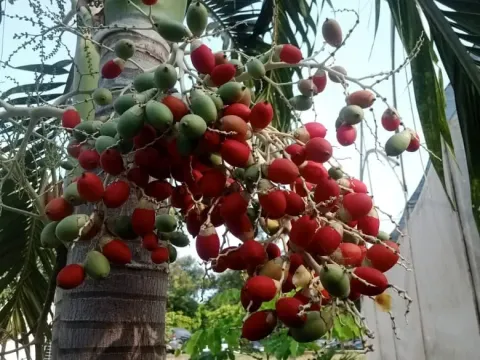
Adonidia (Adonidia merrillii), commonly known as the Christmas palm due to its bright red fruit that ripens in winter, is a member of the Arecaceae family. It is a single-stemmed palm that is highly prized for its graceful appearance.
What the section contains

Adonidia
Native to the Philippines, this species thrives in tropical climates. It is widely cultivated as an ornamental plant in landscapes, providing an elegant vertical element in gardens and street plantings.
The plant requires plenty of sunlight but should be protected from direct, intense midday sun to prevent leaf scorching. For indoor cultivation, a well-lit location is necessary to maintain its structural integrity.
Soil should be well-draining, nutrient-rich, and slightly acidic to neutral. Peat-based mixes with added perlite or coarse sand work well for potted specimens to ensure proper aeration for the roots.
Watering is a critical aspect of care. During the growing season, the plant should be watered regularly, allowing the top layer of soil to dry out between sessions. Overwatering is the most common cause of failure in Adonidia cultivation.
Scale insects and mealybugs are the primary pests that affect Adonidia. These pests hide in the crevices of the palm's crown and leaf bases, weakening the plant by feeding on its sap.
Root rot is a major disease risk, particularly in poorly drained soil or overwatered containers. It often manifests as drooping leaves and a softening of the stem base.
Fungal leaf spots can occur when the palm is kept in environments with poor air circulation and high humidity, leading to unsightly blemishes on the foliage.
Preventative measures include maintaining proper plant hygiene, such as wiping leaves and ensuring adequate airflow, which significantly reduces the risk of pest infestations and fungal growth.
If chemical intervention is required, insecticidal soaps or horticultural oils are recommended, provided they are applied according to the manufacturer's instructions for ornamental palms.