
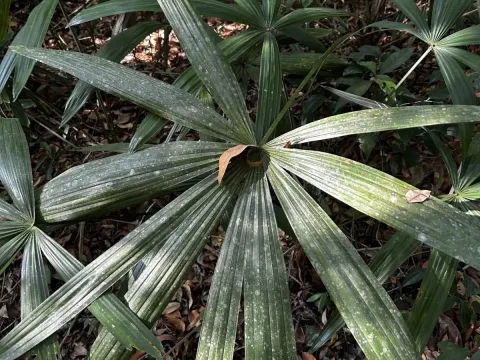
Cryosophila
Cryosophila
Propagation of Cryosophila in nursery environments is primarily achieved through seed germination in controlled conditions.
What the section contains


Cryosophila
Seeds should be sown in a well-draining, nutrient-rich, and slightly acidic medium mixed with perlite to maintain optimal aeration.
The germination process requires consistent warm temperatures between 25 and 28 degrees Celsius, coupled with high humidity levels.
Seeds can exhibit staggered germination, so employing bottom heat mats is highly recommended to encourage uniform sprouting.
Seedlings should be transplanted into individual containers once the first set of true leaves is fully formed to prevent root disturbance.
Cryosophila belongs to the Arecaceae family and is native to the humid tropical forests of Central and South America.
This palm thrives in shaded or semi-shaded environments, mirroring the forest understory where it naturally grows in the wild.
The ideal soil is rich in organic matter, loose, and has excellent drainage to prevent the accumulation of stagnant water.
The plant demands high atmospheric humidity and is sensitive to drying winds, which can easily cause leaf desiccation.
Temperature stability is vital, as the species does not possess cold tolerance and requires protection from any temperature below 15 degrees Celsius.
While not a traditional food crop, Cryosophila is a vital resource for local communities in tropical areas as a source of roofing material.
The large, fan-shaped, and segmented leaves possess unique water-repelling properties that make them ideal for thatched roof construction.
In ornamental horticulture, the output is measured by the production of high-quality, healthy container-grown specimens for landscape design.
With proper care and environmental management, individual plants can provide a renewable source of foliage for many years.
The plant growth rate is moderate, but the longevity of the leaves makes it a highly sustainable resource when harvested responsibly.
Common pests affecting Cryosophila include spider mites and mealybugs, which tend to infest plants in poorly ventilated indoor areas.
Fungal diseases, often associated with overwatering or poor drainage, represent a significant threat to the root system and stem base.
Preventative maintenance, such as regular inspection and maintaining good airflow, is essential for mitigating the risk of pathogen outbreaks.
Application of appropriate fungicides and environmentally safe insecticides is advised when visible signs of infestation appear.
- Maintain proper air circulation
- Avoid overhead watering of the foliage
- Ensure rapid drainage of pots
- Isolate new plants to prevent pest spread
Harvesting for material use involves cutting mature lower leaves, ensuring the central crown remains intact for continuous development.
The use of sharp, disinfected tools is crucial to prevent the spread of diseases and to provide a clean cut that heals quickly.
Harvesting should be done periodically, allowing the palm sufficient time to recover and produce new foliage in its growing point.
After removal, the leaves should be dried in a sheltered, shaded area to preserve the strength and integrity of the leaf fibers.
A balanced harvesting frequency ensures that the plant remains vigorous and productive throughout its long lifespan.