
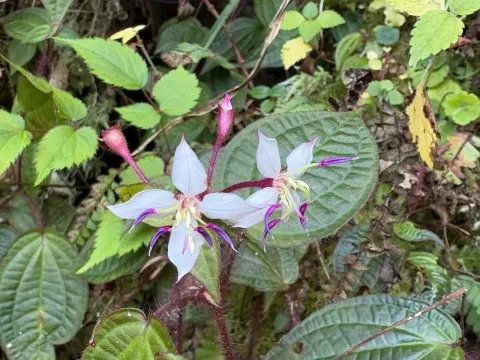
Bredia
Bredia Blume
The genus Bredia belongs to the Melastomataceae family, comprising several species of perennial herbs and shrubs. They are primarily recognized for their ornamental foliage and delicate floral structure.
What the section contains
Bredia
The plant originates from East Asia, with a natural distribution spanning through China and Taiwan. These regions provide the plant with a mild, humid subtropical climate, which is crucial for its healthy growth and development.
Morphologically, Bredia plants display characteristic opposite leaves with longitudinal venation typical of the family. The flowers are usually borne in terminal cymes, providing a vibrant display of pink or purple shades.
To successfully cultivate Bredia, one must provide a well-drained, nutrient-rich, and slightly acidic potting medium. Good aeration around the root zone is paramount to prevent waterlogging and subsequent root decay.
The plants prefer bright, indirect sunlight, as direct exposure can scorch their delicate leaves. Maintaining a stable temperature range between 18°C and 25°C is ideal for maximizing their growth potential throughout the year.
The primary threats to Bredia include fungal infections such as root rot, which are triggered by improper watering practices and poor drainage. Ensuring the substrate dries slightly between waterings is a critical preventative strategy.
Pests, particularly spider mites and mealybugs, are frequent offenders in greenhouse or indoor environments. Their presence can severely weaken the plant by sapping essential nutrients from the leaves and stems.
Leaf spot diseases, often caused by poor air circulation or overcrowding, can diminish the aesthetic value of the plant. Maintaining proper spacing between pots is essential for disease management and prevention.
Biological and chemical control methods should be employed strategically if infestations occur. Regular inspection of the underside of leaves is recommended to detect the presence of pests before they establish a colony.
In addition to pest control, sanitation is vital for preventing the spread of diseases. Always remove dead plant material and ensure that equipment is clean before handling the plants during repotting or propagation.