
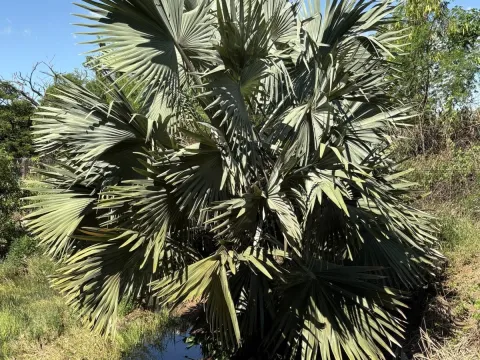
Bismarck palm
Bismarckia Hildebrandt & H. Wendl.
Propagating the Bismarck palm from seeds is a slow process, as the seeds have a thick coat and require a long germination period. The ideal time for sowing is during the spring months when temperatures are consistently warm and stable.
What the section contains

Bismarck palm
To enhance germination rates, seeds should be soaked in warm water for several days, changing the water daily to prevent fermentation. Seeds should be planted at a depth of 2-3 centimeters in a well-draining, sandy-based growing medium.
Maintaining a soil temperature of 25-30 degrees Celsius is crucial for triggering the germination process. Seedlings can take anywhere from two to six months to emerge, requiring consistent moisture and careful observation during this time.
Young plants develop slowly and require deep containers to accommodate their strong taproot system. Great care must be taken during transplantation to avoid damaging the roots, as this can severely set back the plant's growth for a considerable time.
Commercial nurseries often utilize misting systems and bottom heating to create the specific environmental conditions necessary for successful seedling production on a large scale.
The Bismarck palm (Bismarckia nobilis) is a member of the Arecaceae family, native to the savanna regions of Madagascar. It thrives in full sun, which is essential for the plant to develop its signature silvery-blue foliage color.
This palm is heat-loving and struggles with drastic temperature fluctuations. While mature specimens can tolerate light, short-term frosts, the plant prefers a stable thermal range between 20 and 35 degrees Celsius for active development.
The soil must be well-drained, sandy, or loamy with a neutral to slightly acidic pH level. Waterlogging is the most common cause of failure, so providing an efficient drainage system is mandatory for both container-grown and field-planted palms.
Once established, the Bismarck palm is remarkably drought-tolerant, although regular applications of balanced, micronutrient-rich fertilizers during the growing season significantly enhance its vitality and crown density.
The plant features a massive, solitary trunk and large, fan-shaped leaves that can reach three meters in width. As a dioecious species, it produces male and female flowers on separate trees, a factor that is important for seed production purposes.
Fungal diseases related to high humidity and poor aeration are the primary threats to this palm. Leaf spot and root rot are common issues that require prompt treatment with systemic fungicides and improvements in air circulation.
Scale insects and mealybugs are the most frequent pests, feeding on the undersides of leaves and the petiole bases. Regular inspections and the application of horticultural oils or contact insecticides are effective management strategies.
The palm weevil is an especially dangerous pest that can penetrate the trunk and destroy the crown. Monitoring for small entry holes and using systemic preventative treatments are essential practices in areas where these pests are endemic.
Nutrient deficiencies, specifically magnesium and potassium, often manifest as chlorosis on the edges of the fronds. Correcting soil nutrient imbalances with slow-release, palm-specific fertilizers is vital for maintaining the plant's ornamental appeal.
- Regular inspection of the canopy
- Application of systemic fungicides
- Ensuring adequate site ventilation
- Adherence to strict irrigation schedules