
Calamus longipinna
Calamus longipinna
Description
Growing requirements
Calamus longipinna is a species belonging to the Arecaceae family. This climbing palm is a native inhabitant of the tropical rainforests in Southeast Asia, known for its long, flexible stems.
The plant thrives in a hot and humid tropical climate, requiring temperatures between 22°C and 30°C throughout the year. It does not tolerate cold temperatures or frost, making greenhouse cultivation necessary in temperate climates.
Soil requirements are quite specific: the plant prefers well-drained, deep, and nutrient-rich soils. While moisture is essential, the soil must not become waterlogged to avoid root rot issues.
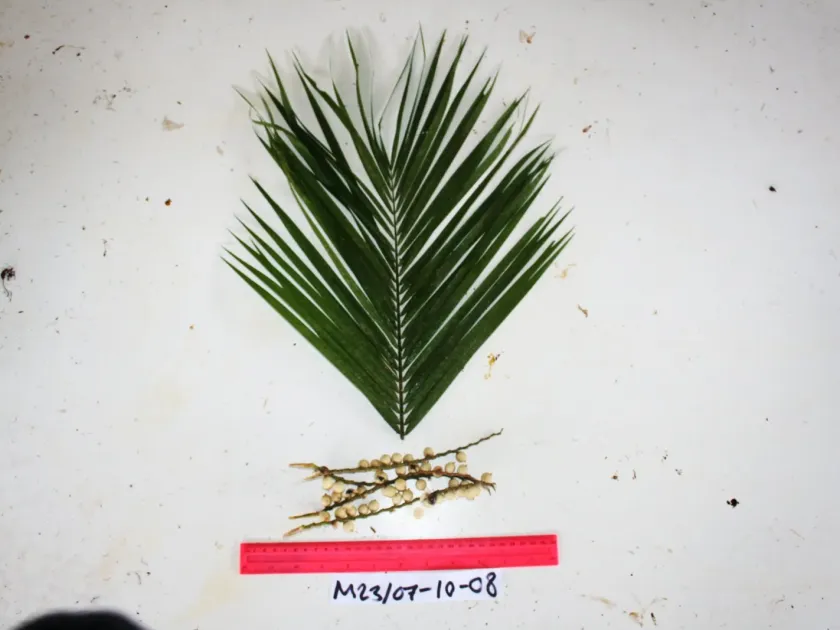
Botanically, this species is characterized by long, thorny stems that use climbing mechanisms to reach the forest canopy. Its pinnate leaves possess sharp spines, which are evolutionary adaptations to assist in climbing and protection.
Proper light management is crucial for growth. While young palms prefer shaded environments under the forest canopy, mature individuals require more access to sunlight for optimal stem elongation and fiber density.
Main diseases and pests
Post-harvest pests, particularly wood-boring beetles, represent the most significant threat to the quality of the raw rattan material if not stored under controlled conditions.
Fungal infections in the field can compromise the structural integrity of the canes, often resulting from poorly ventilated plantations or excessive rainfall leading to stagnant water.
Soil-borne nematodes can impact the growth rate of the palms, particularly in sandy soil compositions, leading to stunted plants and lower fiber yields.
Over-exploitation of wild populations without adequate replanting strategies poses a risk to the long-term sustainability of the resource in its native range.
Leaf spot diseases, caused by various pathogens, can reduce the photosynthetic capacity of the plant, indirectly affecting the development of the stems during the vegetative cycle.
Harvesting
The primary economic value of Calamus longipinna lies in its stems, which are harvested to produce rattan. This material is highly valued globally for its unique combination of strength and flexibility.
Harvesting is typically performed on mature specimens, usually between 7 to 12 years of age. Workers selectively cut the stems, avoiding damage to the plant's rootstock to ensure future regrowth.
Processing involves stripping the thorny bark and leaves immediately after harvesting. The raw canes are then cleaned, sun-dried, and often treated with hot oil to improve durability and resistance to biological threats.
The finished rattan is sorted based on diameter and length, then sold to manufacturers of high-end furniture, basketry, and structural components used in sustainable building designs.
Efficiency in harvesting is essential to avoid waste. Proper calibration of stem diameter ensures that the material meets international trade standards for furniture manufacturing.