
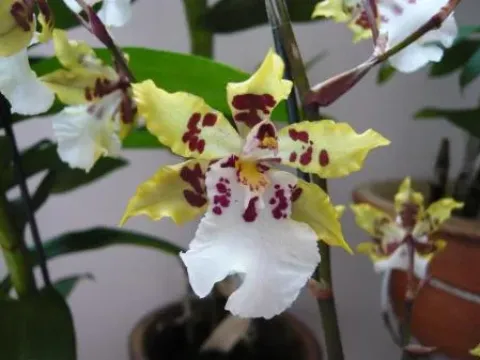
Colmanara
x Colmanara hort.
Colmanara (x Colmanara hort.) is a sophisticated intergeneric hybrid belonging to the Orchidaceae family. It is typically derived from the cross-breeding of Oncidium, Miltonia, and Odontoglossum, inheriting its complex growing requirements from its diverse ancestors.
What the section contains
Colmanara
The plant requires bright, filtered light to perform photosynthesis efficiently without damaging its delicate leaves. Direct sunlight, especially during the afternoon, should be avoided as it can cause severe tissue scorching.
Temperature management is vital for the vegetative stage and blooming cycles. Ideally, the plant thrives in temperatures between 18°C and 25°C, with a slight drop in nighttime temperatures often required to initiate the production of flower spikes.
The potting medium must be coarse and porous to allow for excellent drainage and air circulation around the roots. Common components include fir bark, perlite, and charcoal, which prevent the root zone from becoming waterlogged.
Consistent moisture is necessary, but the plant must be allowed to approach dryness between watering sessions. Overwatering is the most common mistake, leading to root asphyxiation and eventual plant decline.
Fungal pathogens such as Fusarium and various types of rot frequently attack Colmanara when humidity is too high and airflow is stagnant. These conditions promote the rapid spread of decay in the pseudobulbs.
Pests like spider mites, mealybugs, and scale insects are common adversaries. They thrive in dry, stagnant air conditions and can cause significant damage to foliage and flower development if left unmanaged.
Effective pest control involves consistent monitoring and the use of targeted acaricides or systemic insecticides. Botanical oils may be used for mild infestations but require careful application to avoid leaf damage.
Maintenance of optimal humidity levels (between 50% and 70%) and ensuring good ventilation around the foliage acts as a natural deterrent against many pest and fungal problems.
Cultural hygiene, such as removing dead leaf tissue and using sterilized tools for any pruning or division, is essential to minimize the risk of introducing pathogens into the plant's vascular system.