
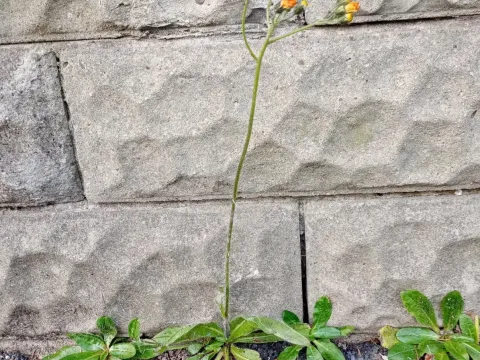
Mouse-ear hawkweed
Pilosella Hill
Mouse-ear hawkweed (Pilosella) is a perennial flowering plant within the Asteraceae family. Known for its distinct hairy foliage, the plant has evolved to thrive in nutrient-poor, sandy, or gravelly soil conditions where competition from other vegetation is minimal.
What the section contains

Mouse-ear hawkweed
The morphology of the plant includes a rosette of basal leaves and creeping above-ground stolons. These stolons are essential for the plant's spread, allowing it to form dense mats across its habitat, which helps in preventing soil erosion in disturbed areas.
The species requires full sun exposure to flourish. While it is highly adaptable, it struggles in shady environments, where photosynthesis is limited and the density of the colony decreases significantly over several growing seasons.
Soil requirements are relatively modest; the plant prefers well-drained substrates with a pH ranging from slightly acidic to neutral. It is remarkably efficient at managing nitrogen uptake in infertile soils, a trait that makes it a persistent colonizer.
Climate tolerance for mouse-ear hawkweed is high, as it endures freezing winter temperatures and hot, dry summers through physiological adaptations such as leaf pubescence, which reduces transpiration during drought periods.
Fungal pathogens are the primary threat to the health of Pilosella populations. Powdery mildew often presents as a significant issue, particularly in late summer when diurnal temperature fluctuations increase ambient humidity levels around the foliage.
Rust infections can also occur, showing up as brown pustules on the undersides of leaves, which can inhibit the plant’s ability to store energy for the winter. Monitoring these symptoms is crucial for maintaining the vigor of the plant crop.
Insect pests include various aphids that target the succulent new growth and flower buds. Infestations lead to stunted development and may facilitate the entry of secondary viral infections.
Root-feeding larvae, such as wireworms, can damage the underground portions of the plant, potentially leading to increased susceptibility to root rot during prolonged periods of waterlogging.
Management strategies involve keeping the planting site well-aerated and ensuring that the density of the plants allows for proper air circulation to deter the buildup of moisture-loving pathogens.