
Calamus lobbianus
Calamus lobbianus
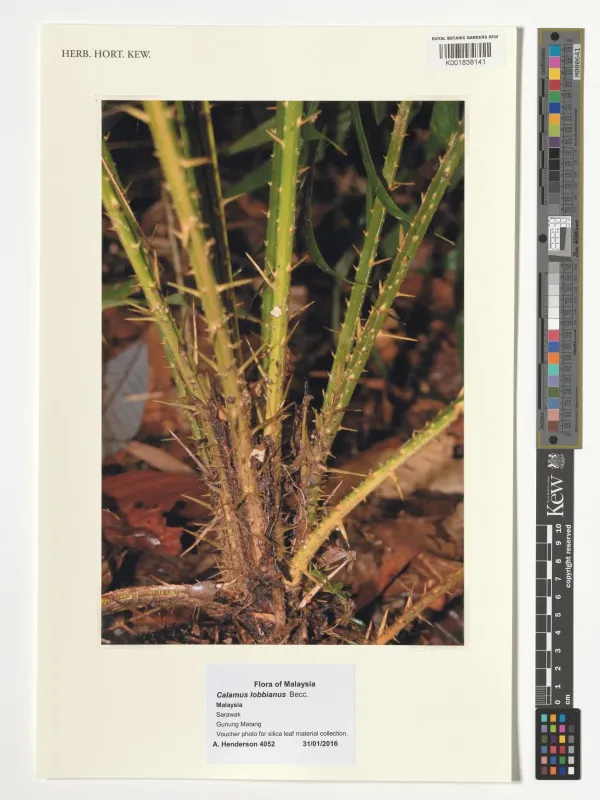
Description
Growing requirements
Calamus lobbianus is a climbing palm belonging to the Arecaceae family. This tropical plant is native to the rainforests of Southeast Asia, where it grows as a vigorous woody liana climbing through the forest canopy.
The crop thrives in hot and humid tropical climates. It requires consistent temperatures between +22°C and +32°C. The species is highly sensitive to cold, and any temperature drop below +15°C will severely hinder its growth and physiological processes.
Soil requirements involve a preference for deep, moisture-retentive, and nutrient-rich soils. In natural environments, it grows well in alluvial floodplains where organic debris provides a constant supply of nutrients.
Agricultural practices for this species focus on providing adequate vertical support. Since it is a climbing plant, growers must ensure that host trees or artificial trellises are available to maintain the structural integrity of the stems.
Light management is crucial, as young plants require shade to prevent heat stress, whereas mature plants need filtered sunlight to encourage the densification of their stems, which is essential for high-quality rattan production.
Harvesting
The economic importance of Calamus lobbianus lies in the harvesting of its stems, widely recognized in the global market as rattan. Harvesting is a labor-intensive process that involves locating mature lianas and cutting them at the base.
Once harvested, the stems undergo an immediate cleaning process to remove the spiny leaf sheaths. This is traditionally done in the field using blades, and it is vital to avoid damaging the inner core of the stem during this phase.
The stems are then sorted, graded, and subjected to steaming or boiling. This thermal treatment is essential to drive out internal moisture and resinous sap, which prevents mold growth and stabilizes the material for future use.
The material is primary used in the manufacturing of high-end furniture, baskets, and structural components. Its natural flexibility allows it to be bent into complex shapes when heated, making it a highly valued artisan resource.
Sustainable harvesting is an important aspect of managing Calamus plantations. By only harvesting mature stems and ensuring that the root system remains undisturbed, the plant can regenerate new shoots, providing a recurring harvest.