
Attalea funifera
Attalea funifera
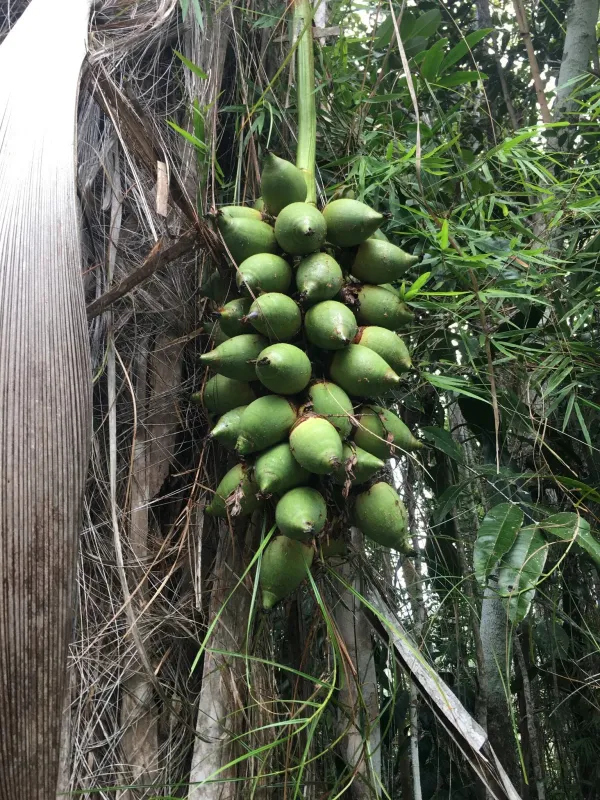
Description
Sowing dates
Propagation of Attalea funifera is primarily achieved through seed sowing. This process is best managed in specialized nurseries where soil temperatures can be regulated to ensure optimal germination rates, as the seeds require consistent warmth to break dormancy.
The substrate used for sowing should be a light, well-draining mixture enriched with sand and organic matter. Pre-treatment of seeds, such as scarification or soaking, is often employed to enhance the uniformity of germination across the seedbed.
The ideal time for sowing coincides with the onset of the rainy season, providing natural moisture support for the developing seedlings. In industrial settings, young palms are kept in protective nursery conditions until they reach a height of 30 to 50 centimeters.
Transplanting seedlings to their permanent location requires strict adherence to planting distances. Proper spacing is essential to allow the palm to develop its characteristic rosette of leaves, which is necessary for healthy fiber production.
The adaptation phase in the field can take up to two years. During this period, consistent irrigation and monitoring of the root system are critical to ensure that the young palms become securely established in their new environment.
Growing requirements
Attalea funifera, a member of the Arecaceae family, is a signature species of the humid tropical forests of South America. Its natural range is concentrated in the coastal regions of Bahia, Brazil, where the climate remains consistently warm.
The culture has strict requirements regarding temperature, favoring stable conditions without significant daily fluctuations. It cannot withstand even brief periods of frost, which can cause severe damage or death to the plant's growing point.
The ideal soil conditions for this palm include deep, sandy, and well-draining soil with a high humic content. While the plant requires moisture, it is sensitive to waterlogged conditions, making well-drained sites a necessity for successful cultivation.
High levels of sunlight are required for optimal growth. Shaded environments inhibit vegetative development and negatively affect the quality and quantity of the fiber harvested from the leaves.
In its native environment, the palm thrives on atmospheric rainfall; however, in organized plantations, supplementary irrigation during drier months is a standard practice to boost productivity and growth rates.
Yield
The primary economic product of Attalea funifera is piassava, a coarse, durable fiber harvested from the base of its leaf petioles. Yields depend significantly on the age of the palm and the level of agricultural maintenance provided.
Harvesting usually begins when the palm reaches maturity, typically between five and seven years after planting. A single healthy, mature tree can be harvested multiple times throughout the year without compromising its long-term health.
While productivity per hectare is considered moderate, the high market value of piassava fiber makes this palm a financially attractive crop for agricultural producers and forestry initiatives in Brazil.
Fiber quality is strongly influenced by local ecological conditions. Optimal soil fertility and balanced moisture promote the development of more elastic and wear-resistant fibers, which are highly sought after by the brush-manufacturing industry.
Beyond fiber, the palm produces oil-rich fruit, which provides an additional revenue stream, allowing for a more integrated and profitable approach to plantation management.
Main diseases and pests
The main pests for Attalea funifera include various palm weevils, which can bore into the growing point of the tree. If detected too late, these infestations can lead to the death of the palm, requiring proactive monitoring and intervention.
Fungal diseases, thriving in conditions of excessive humidity and poor air circulation, can affect the leaves and the crown. Prevention involves maintaining appropriate plant density and practicing good sanitation within the plantation.
Palm mites can cause leaf yellowing and structural deformation, which reduces the plant's photosynthetic efficiency. When populations spike, the application of targeted acaricides is necessary to manage these pests effectively.
While leaf-chewing insects rarely cause lethal damage, they can serve as vectors for viral pathogens. Maintaining high plant immunity through balanced nutrition and proper microelement supplementation is key to resisting these threats.
Incorrect fertilization practices can lead to nutrient imbalances, making the palms more susceptible to opportunistic pathogens. Therefore, regular professional assessments of the trunk and foliage are mandatory for healthy plantation management.
Harvesting
Harvesting piassava fiber is a labor-intensive, manual process. Skilled workers carefully strip the fibrous material from the bases of the petioles, ensuring that the living tissue of the palm remains undamaged during the extraction.
Following extraction, the raw fiber undergoes cleaning, classification by length, and sorting by stiffness. These parameters determine the material's industrial suitability, ranging from coarse brushes to specialized cleaning equipment.
Drying is performed using natural air-drying methods under covered structures. Direct, prolonged exposure to intense sunlight must be avoided to prevent the fiber from becoming brittle and losing its essential mechanical properties.
Once dried, the fiber is pressed into bales for efficient transport and storage. Proper storage in dry, well-ventilated areas is essential to prevent mold growth, which can permanently damage the fiber's structural integrity.
A well-organized harvest cycle allows for sustainable fiber production over several decades, provided that the maintenance of the plantation aligns with the biological requirements of the species.