
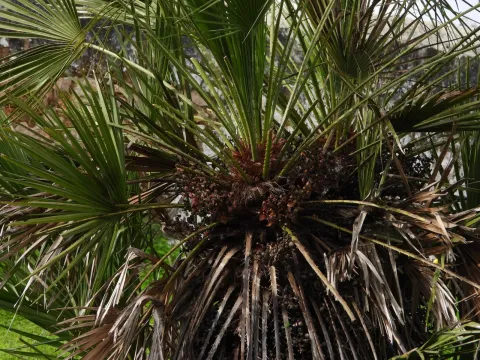
European fan palm
Chamaerops
The propagation of Chamaerops humilis is typically achieved through seeds or by separating offshoots from the base of the main trunk, which is a common practice for this clumping palm.
What the section contains

European fan palm
Seeds should be soaked in warm water for 24 to 48 hours prior to planting to soften the outer shell and enhance the germination rate, which can be slow and irregular.
A well-draining, loose potting mix composed of perlite, sand, and peat moss is ideal for sowing, ensuring that oxygen reaches the developing embryo effectively.
Containers should be kept in a consistently warm environment, ideally between 22 and 26 degrees Celsius, to stimulate root development and shoot emergence.
Seedlings should be handled with care when transplanting to individual pots, as the palm develops a deep taproot that is sensitive to disturbance during the early stages.
Chamaerops humilis is native to the Mediterranean region, making it exceptionally resilient to drought, wind, and intense solar radiation compared to many tropical species.
The soil must have excellent permeability; an ideal substrate for this palm includes a mix of loam, coarse sand, and organic matter to prevent waterlogged conditions.
For container-grown specimens, it is essential to ensure that the pot has large drainage holes and that the plant is not left sitting in a saucer filled with standing water.
Lighting requirements are high; this palm thrives in full sun but can adapt to bright, indirect light, which is particularly beneficial for indoor ornamental plants.
In terms of climate, it can withstand light frosts but prefers a cool and dry resting period during the winter months, preferably in a bright, ventilated area.
Spider mites are the most persistent pest for the European fan palm, thriving in the dry air conditions frequently found in indoor environments during the winter season.
Scale insects often attach themselves to the undersides of the fan-shaped leaves, secreting honeydew and causing the growth of sooty mold, which impairs photosynthesis.
Root rot caused by Phytophthora or Pythium species is a common fungal threat triggered by poor drainage and excessive moisture levels in the root zone.
Routine inspection of the foliage, particularly near the leaf bases and stems, is necessary to catch infestations early before they require aggressive chemical control.
Maintaining proper hygiene by removing dead or yellowing leaves and ensuring adequate airflow significantly reduces the risk of fungal infections and pest colonization.