
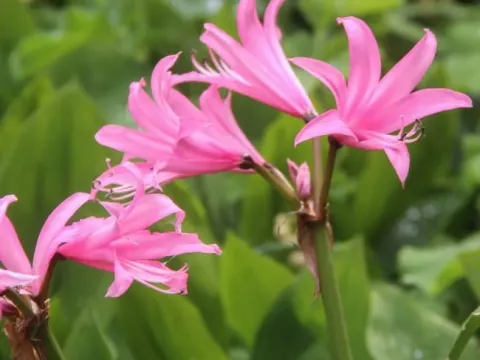
Amarine
x Amarine Sealy
Amarine (x Amarine) is a significant intergeneric hybrid resulting from the cross between Amaryllis belladonna and Nerine bowdenii. As a member of the Amaryllidaceae family, this plant is cherished for its late-season blooms that bring vibrant color to the garden when other flowers fade.
What the section contains

Amarine
The culture thrives in fertile, well-draining soil with a neutral to slightly acidic pH level. Good aeration is crucial for the bulb's health, and in heavier soils, adding grit or perlite is highly recommended to prevent waterlogging, which often leads to root and bulb rot.
Regarding climate, Amarines prefer warm, sunny locations that allow the bulbs to ripen properly during the summer months. In cooler regions, it is best grown in containers, enabling gardeners to move the plant into a frost-free area during the winter season.
Watering requirements vary throughout the year; they need consistent moisture during the growth phase but require a distinct dry period after flowering to enter dormancy. Applying a balanced liquid fertilizer during the active growing season will support robust stalk development.
Amarine is an excellent choice for both greenhouse cultivation and outdoor pots. Its ability to withstand minor temperature fluctuations makes it a versatile plant for collectors, provided that drainage is strictly managed to avoid moisture retention in the root zone.
The primary concern for Amarine is fungal diseases, particularly bulb rot triggered by excess soil moisture. Overwatering is the most common cause of failure, so ensuring a drying-out period between waterings is vital for long-term survival.
Pests like the Narcissus fly are particularly dangerous as their larvae consume the interior of the bulb, often leaving the outer skin intact until the plant collapses. Preventive soil treatments with appropriate insecticides are recommended for high-risk areas.
Aphids and thrips can infest the foliage, sucking vital sap and potentially spreading viral infections. Routine inspection of the leaves and flower stalks allows for quick intervention using horticultural soaps or targeted systemic pesticides.
Nematodes are another silent threat that causes stunting and leaf distortion. If these organisms are present, it is often necessary to discard the infected bulb and sanitize the surrounding soil to prevent spreading the infestation to nearby plants.
Integrated pest management, including maintaining good air circulation around the plants and avoiding overcrowded planting, significantly reduces the pressure from both diseases and pests, ensuring healthy annual growth cycles.