
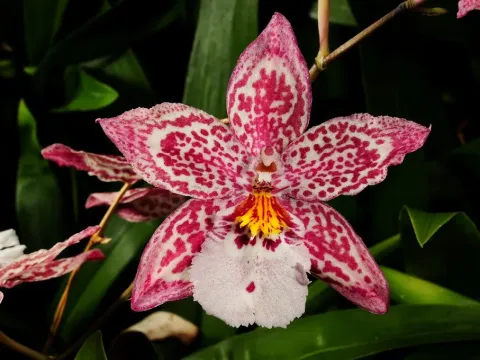
Burrageara
x Burrageara hort.
Burrageara (x Burrageara) is a complex intergeneric hybrid orchid created by crossing four distinct genera: Cochlioda, Miltonia, Odontoglossum, and Oncidium. As a member of the Orchidaceae family, it thrives as an epiphyte, requiring specific cultural practices to simulate its natural habitat.
What the section contains
Burrageara
This orchid prefers bright, filtered light and should be protected from harsh midday sun which can damage the foliage. Ideal indoor temperatures range from 18 to 24 degrees Celsius, with a slight drop at night being crucial to encourage the development of flower spikes throughout the season.
The planting medium must be well-draining, consisting primarily of fir bark, charcoal, and perlite. Proper aeration of the root system is essential for health, as Burrageara is susceptible to rot if its roots are kept in a waterlogged environment for extended periods of time.
Watering should be done thoroughly by immersion or drenching, ensuring the substrate dries slightly between waterings. Maintaining a relative humidity of at least 60 percent is highly beneficial, which can be achieved through the use of room humidifiers or pebble trays under the pots.
Fertilization is performed during the active growing cycle using a balanced liquid orchid fertilizer diluted to half-strength. It is important to flush the pot with clear water periodically to prevent the build-up of fertilizer salts, which can negatively impact root development.
Common pests that affect Burrageara include spider mites, mealybugs, and aphids, which typically congregate on the undersides of leaves. Early detection is key to control; using neem oil or specialized insecticidal soap can effectively manage these infestations without harming the plant.
Fungal and bacterial infections often manifest as soft or black spots on the pseudobulbs, usually triggered by poor ventilation and cool, damp conditions. To mitigate these risks, ensure that air circulation remains constant and that the foliage stays dry, especially during evening hours.