
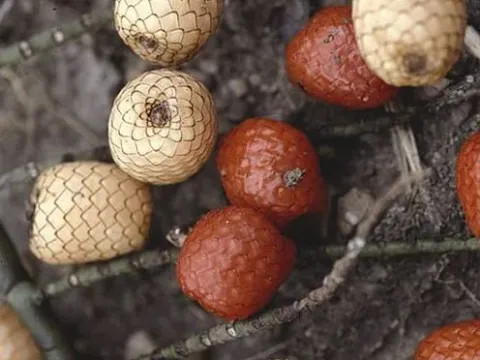
Eremospatha
Eremospatha
Eremospatha is a genus of climbing palms belonging to the Arecaceae family. Native to the tropical rainforests of Africa, these plants are well-adapted to the dense, humid environment of equatorial regions.
What the section contains

Eremospatha
The plant thrives in fertile, moist, and well-drained soils. It requires consistent high temperatures and significant atmospheric moisture throughout the year, making it unsuitable for cultivation in cooler climates.
Botanically, Eremospatha is characterized by its long, slender, and highly flexible stems. The leaves are pinnate and feature specialized hook-like extensions that allow the plant to climb trees to reach the forest canopy.
In its natural habitat, the plant grows in clusters, often forming dense thickets in river valleys. It is a slow-growing species that relies on complex forest layers for protection against excessive heat and wind.
While experimental cultivation exists, the majority of Eremospatha used for commercial purposes is still harvested from wild-grown stocks, necessitating sustainable management practices to prevent overexploitation of the forest.
The harvesting of Eremospatha involves selecting mature vines that have reached the appropriate diameter for industrial use. Careful cutting is essential to ensure that the root system remains intact for regrowth.
Once harvested, the stems are stripped of leaves and prickly outer layers. The inner core is the primary material used for crafting, valued for its exceptional strength and bending capacity.
Proper drying is a critical phase in processing the material. It must be performed in shaded areas with good ventilation to ensure that the stems dry evenly, preventing cracks and brittleness.
The stems are extensively used in the furniture industry to create high-quality rattan-style products, such as chairs, tables, and various decorative household items.
The utilization of this plant provides essential income for many rural communities in Central and Western Africa, while the forest-friendly harvesting methods help maintain the biodiversity of the ecosystem.