
Southern Calamus
Calamus australis
Description
Growing requirements
Southern Calamus is a species within the Arecaceae (palm) family, known scientifically as Calamus australis. It is native to the tropical rainforests of Australia, specifically Queensland, where it thrives in humid and shaded forest environments.
This species is highly dependent on a tropical climate, characterized by consistently warm temperatures and high annual rainfall. It does not possess any cold tolerance and requires a stable, frost-free environment to maintain its vigorous growth rate.
The plant requires deep, nutrient-rich soils with excellent drainage to prevent root rot. While it can adapt to lower light levels in the rainforest understory, maximum stem elongation occurs when the plant successfully reaches patches of filtered sunlight.
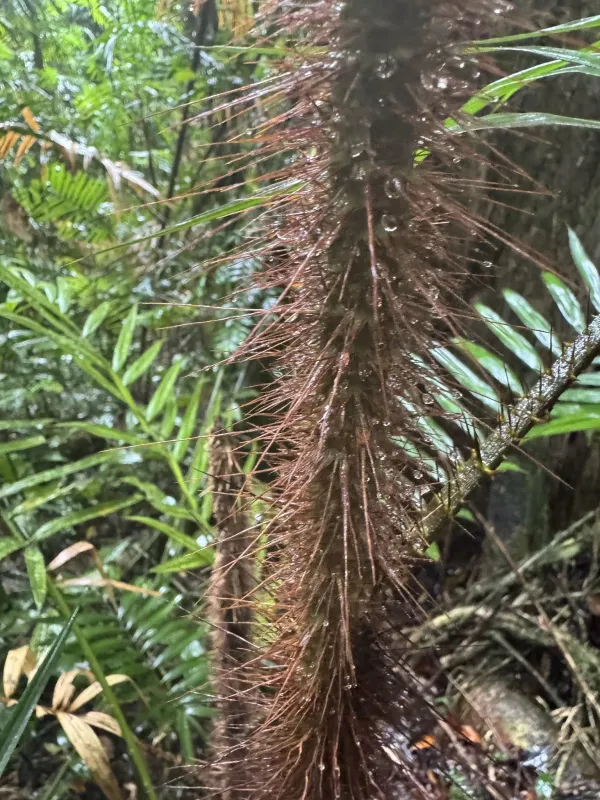
Morphologically, Southern Calamus is a climbing vine with long, resilient stems armed with sharp spines. These stems are light, flexible, and exceptionally durable, featuring pinnate leaves that possess specialized hooks for attachment to host trees.
The economic utility of this species centers on the rattan industry. The harvested stems are stripped, cured, and processed into high-quality furniture components, baskets, and intricate woven designs favored for their aesthetic and structural integrity.
Main diseases and pests
The most significant threat to Calamus australis populations is habitat loss caused by deforestation. As the rainforest canopy is cleared, the structural support system for these climbing palms is destroyed, preventing the species from maturing.
Fungal pathogens represent a primary biological threat, especially in dense stands where airflow is restricted. High humidity levels can lead to stem decay, which significantly degrades the quality of the harvested rattan material.
Insect pests, including various boring beetles and sap-sucking insects, target the stems and apical meristems of the plant. These infestations can stunt growth and introduce secondary infections that compromise the wood's density and appearance.
Over-harvesting of wild populations is an ongoing concern for environmental management. When the internal tissues of the rattan are damaged by improper cutting techniques, the plant becomes highly susceptible to opportunistic bacterial and fungal colonization.
Sustainable cultivation requires regular inspection of plantations to identify signs of pest infestation early. Maintaining adequate spacing between individual plants is the most effective cultural practice to promote air movement and reduce humidity-related disease risks.