
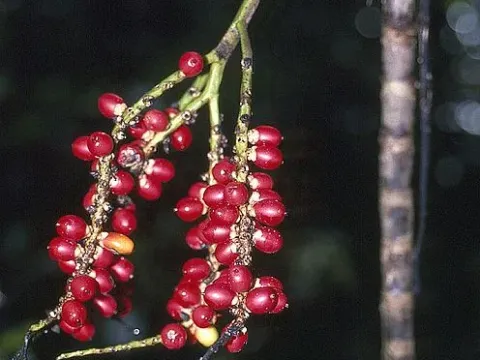
Drymophloeus
Drymophloeus
Drymophloeus is a genus of evergreen palms belonging to the Arecaceae family. Native to the lush tropical rainforests of the Pacific region, these palms thrive in environments that offer constant warmth and high humidity levels throughout the year.
What the section contains


Drymophloeus
To successfully cultivate Drymophloeus, one must maintain a climate ranging from 20 to 28 degrees Celsius. These plants are sensitive to low temperatures and cold drafts, which can cause significant physiological stress and lead to the degradation of the delicate pinnate foliage.
The ideal soil substrate for this palm should be rich in organic matter, loose, and possess excellent drainage capabilities. It is essential to ensure that the water can drain away easily, as waterlogged soil often leads to root rot and the death of the plant.
Regarding light exposure, Drymophloeus prefers bright, indirect sunlight. While these palms need a significant amount of light for photosynthesis, direct midday sun is often too harsh and can scorch the leaves, necessitating the use of light shade cloths or curtains in bright indoor settings.
The primary use of Drymophloeus is ornamental, serving as a striking focal point in tropical landscapes and conservatories. Its slender stem and graceful crown make it a highly sought-after species for collectors and landscape architects interested in exotic, architectural flora.
Major plant health issues typically arise from environmental stressors, particularly overwatering or poor ventilation. Root rot, caused by fungal pathogens, is the most common result of stagnant water in the root zone, often identified by yellowing fronds and stunted growth.
In terms of pests, Drymophloeus is susceptible to common indoor threats such as spider mites, scale insects, and mealybugs. These pests colonize the undersides of the leaves, drawing nutrients and causing chlorosis, which significantly diminishes the overall aesthetic appeal of the palm.