
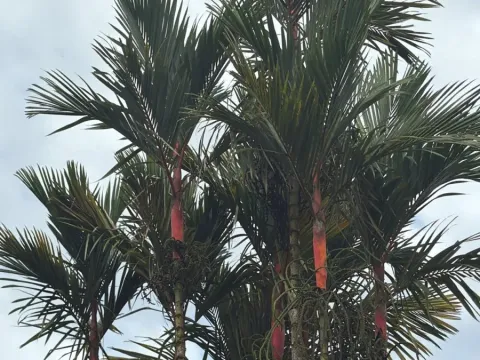
Lipstick Palm
Cyrtostachys
The Lipstick Palm, scientifically known as Cyrtostachys renda, is a stunning member of the Arecaceae family, native to the tropical rainforests and swampy regions of Southeast Asia.
What the section contains

Lipstick Palm
This palm thrives in high-humidity, warm environments where temperatures remain consistent throughout the year, as it lacks cold tolerance and is strictly tropical.
The ideal growing medium is a rich, well-draining, and slightly acidic soil mix that retains moisture while ensuring roots do not remain waterlogged for extended periods.
Agricultural management requires frequent irrigation, mimicking its natural habitat, and periodic feeding with balanced fertilizers to support the production of its vibrant red crown shafts.
Botanically, it is classified as a clumping palm, meaning it develops multiple stems from a single base, which makes it a highly prized ornamental species in tropical landscaping and greenhouse production.
Scale insects are a common pest that attaches to the stems and leaf stalks, causing yellowing and stunted growth if left untreated by agricultural practices.
Spider mites often invade the plant when humidity levels drop below the threshold, leading to visible webs and discolored leaves on the underside of the foliage.
Fungal leaf spot diseases may appear during seasons of high humidity and poor ventilation, often resulting from stagnant water resting on the surface of the fronds.
Root rot is the most critical threat to the plant, usually triggered by compacted soil or irrigation practices that do not account for proper drainage.
Effective pest and disease control requires a combination of early detection, maintaining high hygiene in the growing area, and the application of suitable biocontrol or chemical agents.