
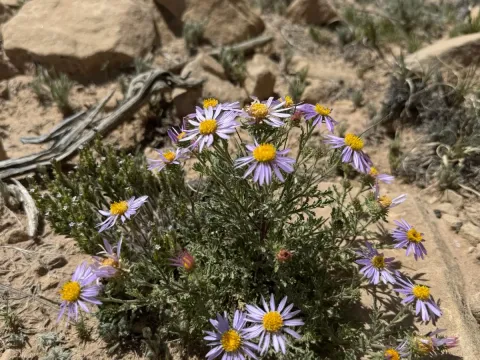
Machaeranthera
Machaeranthera Nees
Machaeranthera, a member of the Asteraceae family, is typically grown as an annual or biennial. For optimal results, seeds should be sown indoors 6 to 8 weeks before the last frost date to ensure a robust start for the growing season.
What the section contains

Machaeranthera
When sowing directly outdoors, wait until the soil has warmed up sufficiently. The seeds require light for germination, so they should be pressed gently into the surface of the soil rather than buried deeply. Keeping the soil consistently moist until germination is crucial.
Cold stratification can significantly improve germination rates, especially for wild-collected seeds or species native to alpine regions. Providing a period of cold before warmth simulates natural conditions and leads to more uniform seedling emergence.
Transplanting seedlings to their final location should only occur once the risk of frost has passed. Young plants generally adapt well to new environments if they are hardened off properly before being placed in direct sunlight.
Proper spacing is essential to prevent overcrowding and ensure adequate airflow, which is vital for the health of these plants. Depending on the species, providing 20 to 40 centimeters of space between plants will allow for full, healthy development.
Machaeranthera is native to arid and semi-arid regions of North America, making it exceptionally drought-tolerant. The plants thrive in full sun and will not perform well in shaded areas, where they tend to become leggy and produce fewer blooms.
The ideal soil for Machaeranthera is sandy, rocky, or gravelly with excellent drainage. These plants are highly susceptible to root rot if left in waterlogged or heavy clay soils, so soil aeration is a top priority for successful cultivation.
They prefer neutral to slightly alkaline soil pH levels. While they can tolerate poor, rocky soils where other plants struggle, moderate applications of balanced fertilizer can enhance the vibrancy and duration of the flowering period.
Temperature tolerance is a key feature of this genus, as it is adapted to harsh summers with high thermal ranges. However, protecting young plants from extreme temperature fluctuations during the early growth stages is recommended.
Watering should be managed carefully, providing deep, infrequent soakings rather than shallow, constant moisture. Once established, Machaeranthera needs very little supplemental water, making it a perfect candidate for water-wise gardening.
The primary yield of Machaeranthera is its profusion of daisy-like flower heads. Its productivity is gauged by the duration and intensity of the bloom, which adds significant visual value to meadows, rock gardens, and native plant landscapes.
A single well-tended plant can produce dozens of flower heads throughout the summer and early autumn. Regular deadheading can extend the blooming season by preventing seed production and encouraging the plant to allocate energy into new buds.
For commercial cut-flower production, yields are estimated by the number of high-quality stems per square meter. With correct plant density and soil management, it provides a consistent supply of durable, aesthetic floral material.
As a nectar-rich plant, its contribution to local biodiversity is another form of yield. By attracting essential pollinators like bees and butterflies, it improves the overall ecological stability and productivity of the surrounding garden area.
Harvesting for floral design is highly productive when blooms are cut at the half-open stage. This allows for a longer shelf life in bouquets and ensures that the structural integrity of the flowers remains intact during the drying process.
Root rot is the most significant threat to Machaeranthera, typically caused by poor soil drainage or excessive watering. Ensuring a gritty, well-draining substrate is the most effective way to prevent these fungal infections.
Powdery mildew can occur during periods of high humidity or poor air circulation. To manage this, ensure plants are spaced appropriately and avoid overhead watering in the evenings, which leaves foliage damp for extended periods.
Pests like aphids and spider mites can infest the soft, growing tips of the plants, especially during hot, dry spells. Early detection via regular inspection is vital to prevent significant damage to the floral displays.
Leaf miners may occasionally create tunnels within the foliage, which, while usually not lethal, can diminish the aesthetic appeal of the plant. Removing heavily infested leaves is often sufficient to control the spread without harsh chemicals.
Weed competition can be devastating during the establishment phase. Using organic mulch around the base of the plants helps suppress weeds and retains soil moisture, allowing the Machaeranthera to establish a competitive root system.
Harvesting should always take place during the mid-morning, after the dew has evaporated but before the heat of the day. This timing ensures the lowest moisture content in the stems, which is essential for successful drying.
Stems must be cut with sharp, clean shears to avoid crushing the plant tissue. Clean tools also prevent the transmission of pathogens, keeping the parent plants healthy for continued blooming throughout the season.
For decorative dried arrangements, hang the bundles of stems upside down in a dark, well-ventilated area. Drying away from direct sunlight preserves the natural pigments of the petals, keeping the colors vibrant for months.
Seed harvesting should be performed once the flower heads have turned brown and the seeds are fully developed. Because the seeds are often wind-dispersed due to their pappus, harvesting them into paper bags before they scatter is recommended.
Clean and store the seeds in a cool, dry place until the next planting season. Proper storage ensures that the high viability of the seeds is maintained, leading to uniform germination and successful plant production in the following year.