
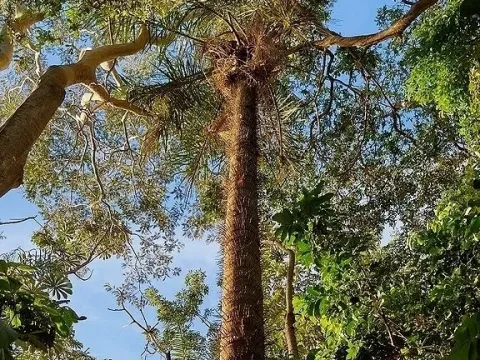
Acrocomia
Acrocomia
Propagation of Acrocomia is primarily achieved through seeds. Due to their hard seed coat, pre-sowing treatments like scarification or soaking in warm water for several days are highly recommended to ensure uniform germination.
What the section contains


Acrocomia
Seeds should be planted in specialized nurseries using a well-drained, nutrient-rich substrate. Maintaining consistent soil temperature and moisture is crucial, as the germination process can be slow and may take several months.
Seedlings are typically transferred to individual containers once they reach the two-leaf stage. This nursery phase continues until the young palms are approximately 40-60 cm tall and robust enough for field transplantation.
Transplanting into the field is ideally timed at the beginning of the rainy season to allow the root system to establish itself before the onset of dry conditions. A spacing of 7 to 8 meters is usually recommended to ensure optimal growth.
Selecting genetically superior seeds is a critical economic decision for plantation owners, as it directly influences oil yield and the overall resilience of the crop.
Acrocomia belongs to the Arecaceae family and is native to tropical regions. It thrives in environments with high annual temperatures and is generally sensitive to severe frosts, which can damage or kill young trees.
This crop is remarkably adaptable to various soil types, ranging from sandy loams to heavier clays, provided that the drainage is efficient. It performs best in soils with good organic matter content and a slightly acidic to neutral pH.
Ideal growth occurs in regions with temperatures averaging between 22°C and 30°C. While Acrocomia shows moderate tolerance to seasonal drought, regular water supply during the early years is essential for reaching full development.
Full sun exposure is a requirement for successful cultivation. Shaded environments inhibit photosynthesis, leading to reduced growth rates and poor fruit development in the mature palms.
Wind protection is necessary during the establishment phase. Planting windbreaks or utilizing appropriate landscape design can prevent mechanical damage to the leaves and help maintain the structural integrity of the growing palms.
The yield of Acrocomia is measured by the weight of fruit bunches produced per hectare. Mature palms typically begin commercial production around the 5th to 7th year, with yields increasing as the tree ages.
Productivity peaks between the ages of 10 and 25 years, during which a well-managed plantation can yield significant tons of fruit per hectare. The oil content in both the mesocarp and the seed kernel is highly valued.
Integrated nutrient management, focusing on nitrogen, potassium, and magnesium, is essential for maintaining consistent annual yields. Fertilizer application should be adjusted based on regular soil and leaf analysis.
Acrocomia plantations are long-term investments, often remaining productive for over 40 years. This longevity makes them a sustainable choice for tropical oil production compared to shorter-lived annual crops.
Ongoing research and selection aim to produce varieties with thinner shells and more pulp, which significantly improves the processing efficiency and the final quality of the extracted oil.
Acrocomia faces risks from various pests, particularly palm weevils that bore into the apical bud, which can be fatal to the tree. Early detection and the use of pheromone traps are standard control measures in modern plantations.
Fungal diseases, including leaf spots and root rots, are more prevalent in high-humidity areas with poor air circulation. Proper spacing and regular sanitation help to mitigate these threats significantly.
Phytoplasmas and other systemic pathogens can cause severe decline. Strict phytosanitary protocols are required to prevent the spread of such diseases throughout the planting area.
Mechanical damage to the trunk or leaves during maintenance provides an entry point for pathogens. It is vital to train workers on gentle handling and to sanitize all pruning equipment between trees.
- Regular monitoring of the growing point
- Balanced fertilization schedule
- Sanitary pruning of dead or infected fronds
- Adequate drainage systems
- Proactive pest management using eco-friendly insecticides
Harvesting Acrocomia is challenging due to the sharp spines found on the trunk and fronds of most species. Workers must wear appropriate protective clothing to avoid injuries while collecting the fruit bunches.
Determining the correct harvest time is based on fruit color; a transition from green to deep yellow or orange indicates optimal oil maturity. Harvesting too early results in significantly lower oil quality.
The harvested bunches must be transported to the processing facility quickly, ideally within 24 to 48 hours. Delayed processing leads to fermentation and a rise in free fatty acids, which lowers the market value of the oil.
Mechanized harvesting tools, such as hydraulic lifts, are becoming more common to help workers access high fruit bunches safely, thereby increasing the efficiency and safety of the operation.
Post-harvest processing involves threshing to detach the fruits from the bunch, followed by pulping to separate the mesocarp from the nut, and finally, oil extraction from both parts of the fruit.