
Dragon's Blood Rattan
Calamus draco
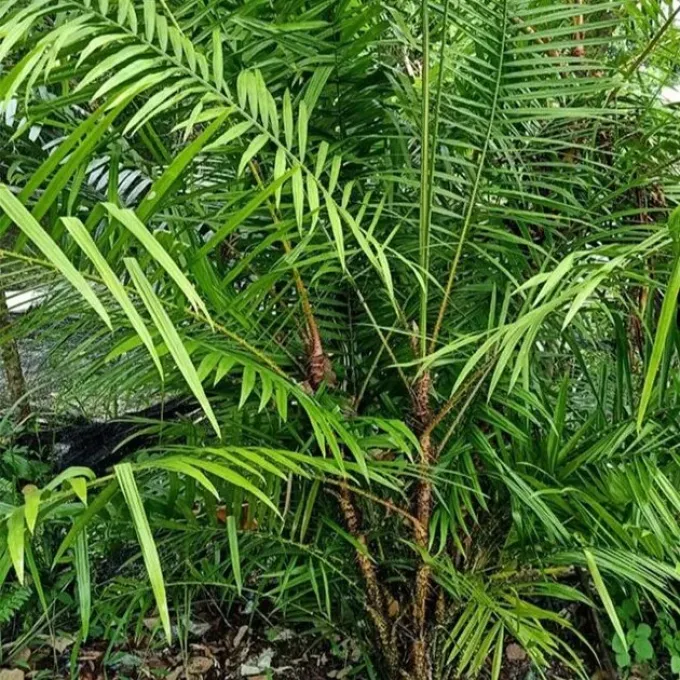
Description
Growing requirements
Calamus draco, commonly referred to as the Dragon's Blood Rattan, is a significant climbing palm species belonging to the Arecaceae family. It is native to the tropical rainforests of Southeast Asia, thriving in humid environments.
The plant functions as a long, trailing vine that utilizes other trees as biological supports to reach the canopy. Its growth habit is closely linked to its adaptation to the dense forest understory where competition for light is intense.
Climatic requirements are strict: the plant necessitates constant tropical temperatures between 24 and 30 degrees Celsius. Exposure to cold or dry air can cause physiological damage and significantly stunt the plant's growth.
Soil composition must be rich in organic matter and possess excellent drainage properties. While the plant loves water, stagnant conditions in the root zone are highly detrimental and often lead to systemic failure.
Agricultural management requires the construction of trellises or supports to facilitate vertical growth. This ensures that stems remain straight and healthy, which is vital for the quality of both the resin and the rattan material.
Main diseases and pests
Fungal pathogens represent the most significant threat to Calamus draco plantations, particularly in areas with poor air circulation. Root rot is a common issue that can destroy entire sections of a crop.
Pest pressures primarily come from sucking insects such as mealybugs and scale insects. These pests feed on the nutrient-rich sap, weakening the plant and making it susceptible to secondary infections.
Nutritional imbalances, often resulting from poor soil management, can manifest as chlorosis. This condition reduces the plant's overall vigor and directly impacts the quality and quantity of resin production.
Integrated pest management strategies involve regular field inspections and the use of targeted biological controls. Preventive measures, such as maintaining proper plant spacing, are crucial for airflow.
Environmental stress, such as prolonged drought or extreme humidity fluctuations, can trigger opportunistic diseases. Maintaining a stable microclimate is the most effective way to protect the integrity of the plantation.
Harvesting
The primary economic output of Calamus draco is the resinous exudate produced by its fruit, historically referred to as "dragon's blood." This deep red substance is a valuable product in various global industries.
Harvesting techniques involve collecting mature fruit clusters once they reach the peak of resin production. This process requires manual labor and specialized tools due to the presence of sharp spines on the plant's surface.
The extracted resin is processed and refined for use in high-end varnishes, paints, and wood stains. Its chemical properties provide durability and a distinct aesthetic quality highly valued by artisans.
Additionally, the stems of the plant are harvested for the rattan industry. These stems are processed into fibers used in high-quality furniture, basketry, and weaving, known for their strength and extreme flexibility.
Sustainable harvesting practices are essential for long-term viability. By carefully selecting only mature plants and leaving younger ones to develop, producers can maintain a consistent yield over many years.