
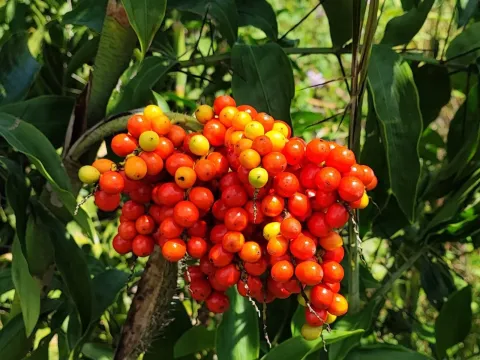
Desmoncus
Desmoncus
Desmoncus is a genus of climbing palms belonging to the Arecaceae family, native to the tropical regions of Central and South America. Unlike most palms, these plants possess flexible, vine-like stems that use hook-like spines on their leaves to scramble through the forest canopy, reaching heights of several meters.
What the section contains


Desmoncus
Cultivation of Desmoncus requires a strictly tropical climate characterized by consistently high temperatures and significant humidity. These plants thrive in environments that mimic the floor and mid-canopy levels of rainforests, necessitating shaded conditions to prevent the desiccation of their delicate leaf structures.
The soil requirements for optimal growth focus on high organic content and excellent drainage properties. While the plant appreciates regular moisture, it is sensitive to waterlogged conditions, which can lead to rapid root decay. A light, friable substrate with a slightly acidic pH is ideal for nursery propagation.
Agrotechnical practices involve providing structural support for the climbing stems to ensure uniform development. Without adequate supports, the stems tend to cluster on the ground, resulting in stunted growth and a reduction in the flexibility required for the industrial processing of the canes.
The economic value of Desmoncus lies in its stems, which serve as a viable alternative to traditional rattan. Harvested canes are processed to create high-strength, flexible material used in the manufacturing of furniture, baskets, and decorative artisanal goods, which are highly valued in both local and international markets.
The primary threats to Desmoncus include fungal pathogens that exploit high humidity and poor ventilation within plantations. These pathogens specifically target the stems, leading to necrosis and weakening the physical structure, which renders the cane useless for high-quality weaving purposes.
Pest populations, including palm-boring insects and sap-sucking mites, pose significant challenges to plantation management. These pests weaken the plant's structural integrity, often causing deformities that negatively impact the harvest yield and the consistency of the commercial-grade material.