

Reference · Crops
Liliaceae
The Liliaceae family comprises a significant group of monocotyledonous plants, characterized primarily by the formation of bulbs or rhizomes. These underground storage organs are essential for the survival and annual cycle of these plants, allowing them to thrive in regions with distinct seasonal changes.
Main sections
178
sections
What the section contains
 Lily
Lilium L.
12 items
Lily
Lilium L.
12 items
 Tulip
Tulipa L.
7 items
Tulip
Tulipa L.
7 items
 Adobe Lily
Fritillaria pluriflora
Adobe Lily
Fritillaria pluriflora
 Agenan tulip
Tulipa agenensis
Agenan tulip
Tulipa agenensis
 Albanian lily
Lilium albanicum
Albanian lily
Lilium albanicum
 Albury fritillary
Fritillaria alburyana
Alfred's Fritillary
Fritillaria alfredae
Albury fritillary
Fritillaria alburyana
Alfred's Fritillary
Fritillaria alfredae
 Aman fritillary
Fritillaria amana
Aman fritillary
Fritillaria amana
 Amana
Amana
2 items
Amana
Amana
2 items
 American lily
Lilium american
American lily
Lilium american
 American trout lily
Erythronium americanum
American trout lily
Erythronium americanum
 Armenian fritillary
Fritillaria armena
Armenian fritillary
Fritillaria armena
 Armenian lily
Lilium armenum
Armenian lily
Lilium armenum
 Armenian tulip
Tulipa armena
Armenian tulip
Tulipa armena
 Asiatic lily
Lilium asiatic
Asiatic lily
Lilium asiatic
 Assyrian fritillary
Fritillaria assyriaca
Assyrian fritillary
Fritillaria assyriaca
 Aurelian lily
Lilium aurelianense
Aurelian lily
Lilium aurelianense
 Avalanche lily
Erythronium montanum
Avalanche lily
Erythronium montanum
 Aximensis Tulip
Tulipa aximensis
Aximensis Tulip
Tulipa aximensis
 Baker's Lily
Lilium bakerianum
Bieberstein's tulip
Tulipa biebersteiniana
Baker's Lily
Lilium bakerianum
Bieberstein's tulip
Tulipa biebersteiniana
 Billet tulip
Tulipa billetiana
Billet tulip
Tulipa billetiana
 Bosnian lily
Lilium bosniacum
Bosnian lily
Lilium bosniacum
 Broad-leaved fritillary
Fritillaria latifolia
Broad-leaved fritillary
Fritillaria latifolia
 Brown's Lily
Lilium brownii
Brown's Lily
Lilium brownii
 Bukhara fritillary
Fritillaria bucharica
Bukhara fritillary
Fritillaria bucharica
 Calochortus
11 items
Calochortus Purshii
Calochortus Pursh.
Calochortus
Calochortus
11 items
Calochortus Purshii
Calochortus Pursh.
 Canada lily
Lilium canadense
Canada lily
Lilium canadense
 Cardiocrinum
3 items
Cardiocrinum
Cardiocrinum
3 items
 Carian fritillary
Fritillaria carica
Carian fritillary
Fritillaria carica
 Carniolan lily
Lilium carniolicum
Carniolan lily
Lilium carniolicum
 Catesby's lily
Lilium catesbaei
Catesby's lily
Lilium catesbaei
 Caucasian fawn lily
Erythronium caucasicum
Caucasian fawn lily
Erythronium caucasicum
 Caucasian fritillary
Fritillaria caucasica
Caucasian fritillary
Fritillaria caucasica
 Caucasian lily
Lilium monadelphum
Caucasian lily
Lilium monadelphum
 Chalcedonian lily
Lilium chalcedonicum
Chalcedonian lily
Lilium chalcedonicum
 Ciliate lily
Lilium ciliatum
Ciliate lily
Lilium ciliatum
 Clintonia
4 items
Clintonia
Clintonia
4 items
 Clusius tulip
Tulipa clusiana
Clusius tulip
Tulipa clusiana
 Columbia lily
Lilium columbianum
Columbia lily
Lilium columbianum
 Conical fritillary
Fritillaria conica
Conical fritillary
Fritillaria conica
 Coral lily
Lilium pumilum
Coral lily
Lilium pumilum
 Cretan tulip
Tulipa cretica
Cretan tulip
Tulipa cretica
 Cyprus tulip
Tulipa cypria
Cyprus tulip
Tulipa cypria
 Darwin tulip
Tulipa darwin
Darwin tulip
Tulipa darwin
 Daurian lily
Lilium dauricum
Daurian lily
Lilium dauricum
 Davis fritillary
Fritillaria davisii
Davis fritillary
Fritillaria davisii
 Didier's Tulip
Tulipa didieri
Didier's Tulip
Tulipa didieri
 Dogtooth violet
Erythronium japonicum
Dogtooth violet
Erythronium japonicum
 Double tulip
Tulipa double
Double tulip
Tulipa double
 Drenovskii fritillary
Fritillaria drenovskii
Drenovskii fritillary
Fritillaria drenovskii
 Dutch lily
Lilium hollandicum
Dutch lily
Lilium hollandicum
 Eichler's tulip
Tulipa undulatifolia
Eichler's tulip
Tulipa undulatifolia
 Elwes' fritillary
Fritillaria elwesii
Elwes' fritillary
Fritillaria elwesii
 Erythronium
 L.
1 item
Erythronium
Erythronium L.
1 item
 Erythronium hybrid
s
Erythronium hybrid
Erythronium hybrids
 Fergana tulip
Tulipa ferganica
Fergana tulip
Tulipa ferganica
 Flax-leaved tulip
Tulipa linifolia
Flax-leaved tulip
Tulipa linifolia
 Fleischer's Fritillary
Fritillaria fleischeriana
Fleischer's Fritillary
Fritillaria fleischeriana
Marketplace
Products in this section · 12


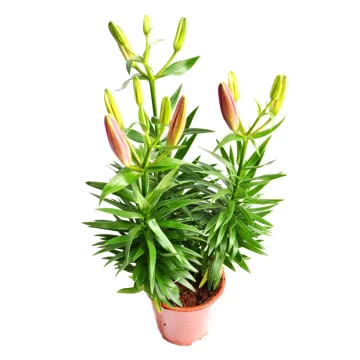


Liliaceae
Originating primarily from the temperate and subtropical regions of the Northern Hemisphere, these plants have been domesticated and hybridized for centuries. Today, they are cultivated globally in commercial nurseries and field agriculture, holding substantial economic value in the ornamental and medicinal plant sectors.
Botanically, members of this family possess regular, often showy flowers with six tepals arranged in two whorls. Their leaves are characteristically simple with parallel venation, and the root system is typically adventitious, growing from a basal plate, which is a vital feature for water and nutrient uptake.
Successful cultivation requires specific agrotechnical approaches, particularly emphasizing soil drainage. A light, friable substrate with a neutral pH level is ideal to prevent root rot. Management involves strategic fertilization schedules, focusing on potassium and phosphorus levels to promote strong bulb development and high-quality floral stems.
Maintaining crop health involves consistent monitoring for common threats:
- Botrytis blight and Fusarium wilt, which thrive in humid conditions.
- Lily beetles, which can cause severe defoliation if left unchecked.
- Bulb mites, often introduced through contaminated planting material.