
Chamaedorea hybrids
Chamaedorea hybrids
Description
Growing requirements
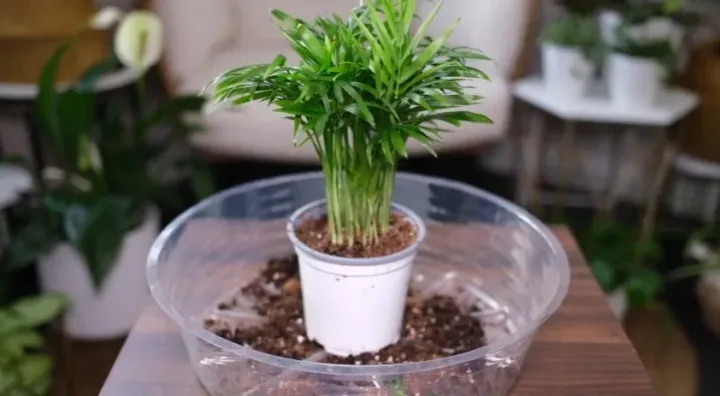
Chamaedorea hybrids belong to the Arecaceae family and represent a group of ornamental palm cultivars selected for their enhanced resilience and compact aesthetic. These plants are widely utilized as agricultural indoor crops due to their adaptability to residential environments.
The native range of the parent species includes the tropical rainforests of Mexico and Central America. These understory plants are biologically optimized to thrive in environments with dappled light and high atmospheric humidity, characteristics maintained in modern hybrid variants.
Successful cultivation requires specific temperature conditions, ideally ranging from 18 to 25 degrees Celsius. The plants must be protected from cold drafts and direct solar radiation, which can cause significant physiological stress and necrotic spotting on the foliage.
The substrate must be well-draining, consisting of peat, pine bark, and perlite or coarse sand to ensure optimal gas exchange at the root level. A pH level between 6.0 and 7.0 is considered ideal for maintaining consistent nutrient uptake and root health.
Agronomic management involves maintaining high air humidity levels to prevent dehydration of the leaflets. During the active growth phase, fertilization with nitrogen-rich compounds is essential to sustain the palm's vigor and vibrant green color of the pinnate leaves.
Main diseases and pests
The most common biological threats include infestation by spider mites and scale insects, which proliferate in low-humidity conditions. Integrated pest management strategies, such as mechanical cleaning and the use of insecticidal soaps, are recommended for control.
Root rot and stem blight represent the primary pathological risks, usually triggered by waterlogged soil conditions and poor aeration. Proper moisture management, alongside fungicidal treatments if necessary, remains the most effective preventive measure against these conditions.