
Caryota obtusa
Caryota obtusa
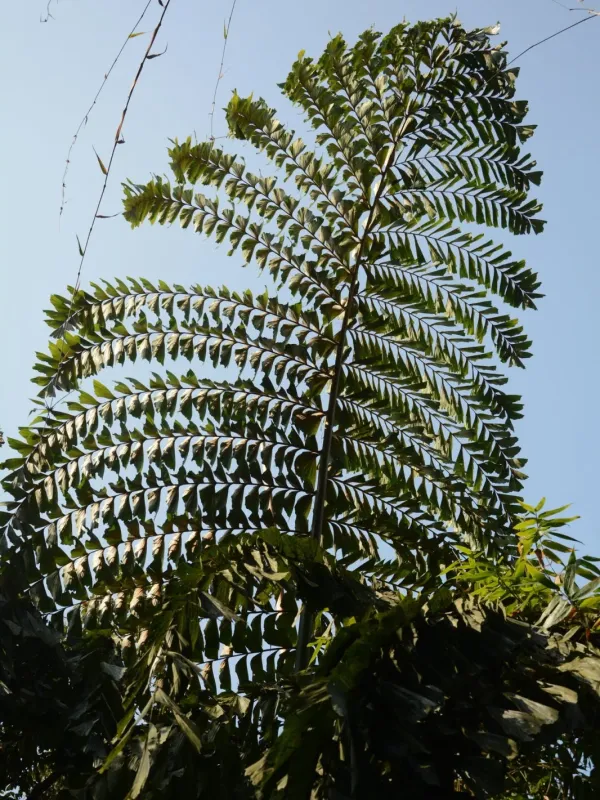
Description
Growing requirements
Caryota obtusa, commonly known as the giant fishtail palm, is a member of the Arecaceae family. It is distinguished by its unique bipinnate leaves that resemble fish fins, making it a highly prized species in tropical horticulture and landscaping.
The plant is hapaxanthic, meaning that after the flowering and fruiting cycle is complete, the main stem dies. This biological trait is critical for farmers to manage, as it dictates the replacement schedule and long-term planning for plantations or ornamental plots.
For optimal growth, this palm requires a tropical climate with temperatures consistently between +20°C and +30°C. It has very little cold tolerance and is strictly suited for greenhouse cultivation in temperate latitudes, where light levels and humidity can be strictly regulated.
The soil must be rich in organic matter, well-draining, and maintain a slightly acidic to neutral pH. Regular fertilization with balanced NPK formulas, supplemented with micronutrients, is essential to sustain the rapid growth rate characteristic of this species.
Maintaining high relative humidity, ideally above 60%, is paramount for the health of the foliage. Proper spacing and airflow are necessary to prevent the accumulation of moisture and the subsequent development of pathogens on the fronds.
Main diseases and pests
The primary pests affecting Caryota obtusa include spider mites and mealybugs, which proliferate rapidly in low-humidity environments often found in indoor or glasshouse settings.
Root rot caused by Phytophthora or Pythium species is a major threat, usually resulting from over-irrigation or inadequate drainage within the root zone.
Integrated pest management strategies should include regular monitoring and the use of systemic insecticides, provided they are applied in compliance with safety standards for indoor environments.
Leaf spot diseases, often triggered by poor ventilation and water droplets remaining on leaves, can be managed with applications of appropriate copper-based fungicides.
Overall plant health is best maintained through strict sanitation protocols, preventing the introduction of infected nursery stock, and ensuring the environment remains within the optimal physiological parameters for the palm.