
Calamus erinaceus
Calamus erinaceus
Description
Growing requirements
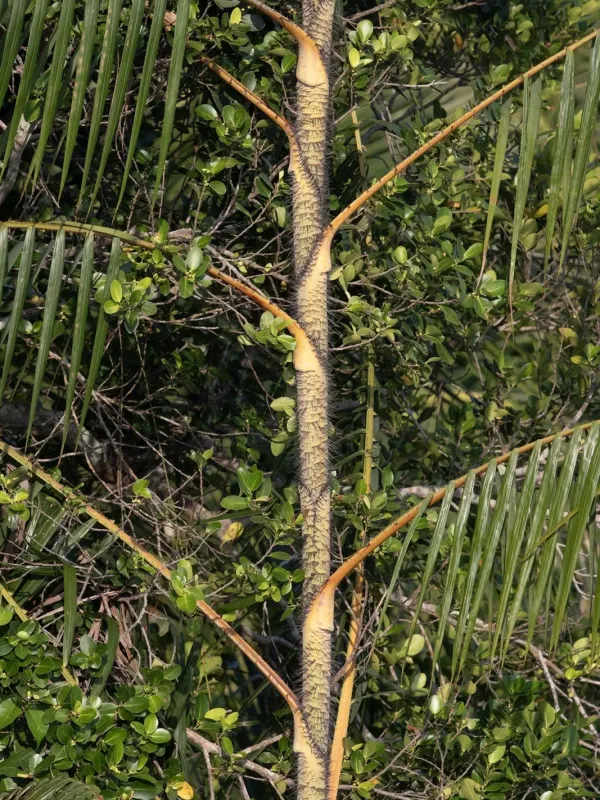
Calamus erinaceus is a species of climbing palm belonging to the Arecaceae family. This tropical plant is highly valued for its long, flexible, and durable stems, which are biologically adapted to climb through forest canopies using specialized recurved spines.
The native range of this species is located in the tropical regions of Southeast Asia. It thrives in low-lying, swampy forest environments where humidity levels remain consistently high throughout the year, making it well-adapted to wetland conditions.
Climatic requirements are strictly tropical, requiring warm temperatures without significant seasonal fluctuations. An optimal environment should maintain temperatures between 24°C and 30°C, combined with high annual precipitation to support rapid vegetative growth.
The plant requires deep, moisture-retentive soils rich in organic matter. Cultivation sites must provide sufficient water availability, as the plant is sensitive to prolonged dry spells which can hinder the development of the stems and reduce their structural quality.
Agricultural management primarily involves the maintenance of forest structures that provide support for the growing stems. Cultivation outside of natural forest systems requires artificial shading and vertical trellising to mimic the natural habitat and prevent damage from direct solar radiation.
Harvesting
The primary economic use of Calamus erinaceus is the harvesting of stems for the rattan industry. These stems are processed to create high-quality wicker furniture, structural components, and various household decorative items known for their strength and longevity.
Harvesting involves cutting mature stems, followed by careful cleaning and heat treatment. This process removes the outer layer and makes the stems flexible enough to be bent into various shapes without snapping, ensuring they remain resistant to biological degradation.