
Iriartea deltoidea
Iriartea deltoidea
Description
Growing requirements
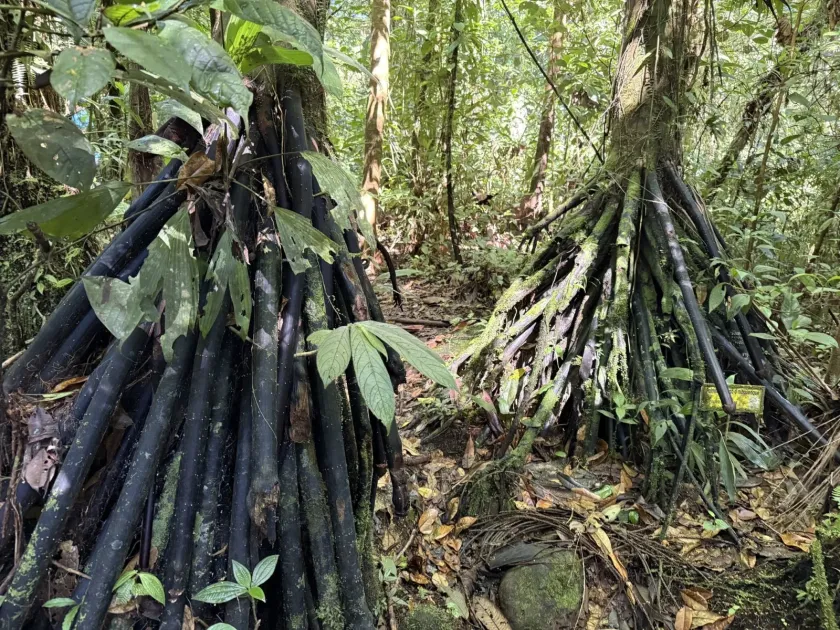
Iriartea deltoidea, commonly known as the stilt palm, belongs to the Arecaceae family. It is distinguished by its tall, slender trunk and an iconic cone of stilt roots that lift the base of the stem above the ground level, providing stability in loose tropical soils.
This species is native to the tropical forests of Central and South America. It thrives in high-rainfall regions and prefers fertile, well-drained soils rich in organic matter. Waterlogging should be strictly avoided to maintain the health of the root system.
Temperature requirements are demanding, as the plant does not tolerate frost or chilling. Consistent temperatures between 22°C and 30°C are ideal for the rapid growth of this palm. High humidity is a critical factor for its survival and long-term development.
The botanical structure of this palm includes large, pinnate leaves that can reach several meters in length. These leaves are arranged in a crown, providing essential shade in agroforestry systems and regulating the microclimate beneath the canopy.
In cultivation, the stilt palm is valued for its unique appearance and its role in ecosystem services. It is often integrated into mixed-crop systems where it provides structural integrity to the land and serves as a sustainable source of building materials.
Harvesting
The primary agricultural and domestic use of Iriartea deltoidea is related to its exceptionally hard wood. The outer layers of the trunk are extremely dense, making them highly resistant to rot and insect attacks, which is ideal for construction.
Local communities utilize the trunks for building house frames, pillars, and various tools. Sustainable harvesting involves selective cutting, ensuring that younger individuals remain to perpetuate the population and maintain forest cover.
Leaves are gathered for traditional roofing in tropical areas. The structural composition of the foliage provides excellent protection against heavy tropical rains and contributes to the longevity of the shelters.
While the fruit is not a primary human food source, it plays a vital role in the food web for local fauna. This relationship is crucial for maintaining the biodiversity of the agricultural landscapes where these palms are preserved.
Ongoing efforts in tropical forestry focus on the sustainable propagation of this species. By understanding the growth patterns and recovery times, farmers can manage Iriartea populations as a renewable resource for long-term agricultural stability.