
Calamus ciliaris
Calamus ciliaris
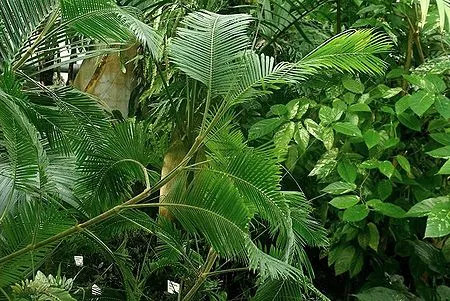
Description
Sowing dates
The propagation of Calamus ciliaris for agricultural or ornamental use is mainly performed through seeds. The seeds exhibit low germination rates and a dormant phase, making scarification and pre-soaking in growth stimulants essential for successful results.
Seeds should be sown in a loose, humus-rich substrate, maintaining a soil temperature between 25 and 28 degrees Celsius. Constant humidity must be provided throughout the germination period without waterlogging the container.
Transplanting seedlings must be done with extreme care to avoid damaging the root system. Using the method of shifting the entire soil ball to a new container is highly recommended to minimize stress on the young plant.
In their natural environment, seedlings develop under the dense forest canopy. Cultivation efforts should aim to simulate this by providing filtered light and high humidity levels during the initial stages of development.
Growth is relatively slow in the early years. It requires a long-term commitment to ensure the plants reach the desired maturity for harvesting their valuable stems.
Growing requirements
Calamus ciliaris is a member of the Arecaceae family, originating from tropical environments. It thrives in conditions with high relative humidity, ideally above 75%, and consistent year-round warmth.
The ideal soil is fertile, slightly acidic, and well-draining. Because this species is highly susceptible to root rot caused by stagnant water, excellent drainage is the most critical factor in soil preparation.
The temperature should remain between 22 and 30 degrees Celsius. Exposure to cold temperatures, especially below 15 degrees Celsius, can significantly stunt growth and lead to the decline of the plant.
As a climbing palm, it requires support structures to develop its stems properly. Its leaves and stems are armed with sharp spines, which it uses to cling onto surrounding vegetation to reach higher light intensities.
Regular fertilization with micronutrients and organic matter is recommended to ensure robust growth. A balanced approach helps the plant develop the flexible yet strong fibers that make rattan economically important.
Main diseases and pests
Common pests include spider mites and scale insects, which often colonize the plant when ambient humidity levels drop below optimal thresholds. These pests can rapidly weaken the plant by sucking sap from the leaves.
Fungal diseases, specifically root rot and various leaf spot pathogens, are frequently encountered in poorly ventilated environments with excess soil moisture. These infections can be lethal if not addressed early.
Physical injuries to the stem can lead to secondary bacterial infections. Handling the plants with care during maintenance and harvesting is critical to protecting the health of the entire crop.
Integrated pest management, utilizing biological control agents and fungicides, is the preferred method for maintaining healthy plantations. Avoiding overly aggressive chemical interventions is important for environmental safety.
Regular monitoring and sanitation, including the removal of dead or infected leaves, are vital strategies for preventing the spread of diseases within the cultivation area.
Harvesting
The harvest of Calamus ciliaris involves the extraction of long, woody stems. This process is physically demanding and hazardous due to the extremely sharp thorns present on the leaf sheaths and canes of the plant.
Harvesting is traditionally done by hand, requiring specialized tools for cutting the canes at their base and removing the foliage. Protective clothing is mandatory to prevent injury from the plant's natural defenses.
Post-harvest processing involves stripping the stems of their outer bark and cleaning them to expose the smooth cane underneath. This raw material is then graded by thickness and flexibility for industrial use.
Proper drying is essential to prevent mold growth and ensure the structural integrity of the rattan. The canes must be cured under controlled temperature and airflow conditions to achieve the desired quality.
Selective harvesting is the best practice to maintain the health of the palm population. Cutting only mature stems allows the remaining base to continue growing and producing future yields.