
Borassus aethiopum
Borassus aethiopum
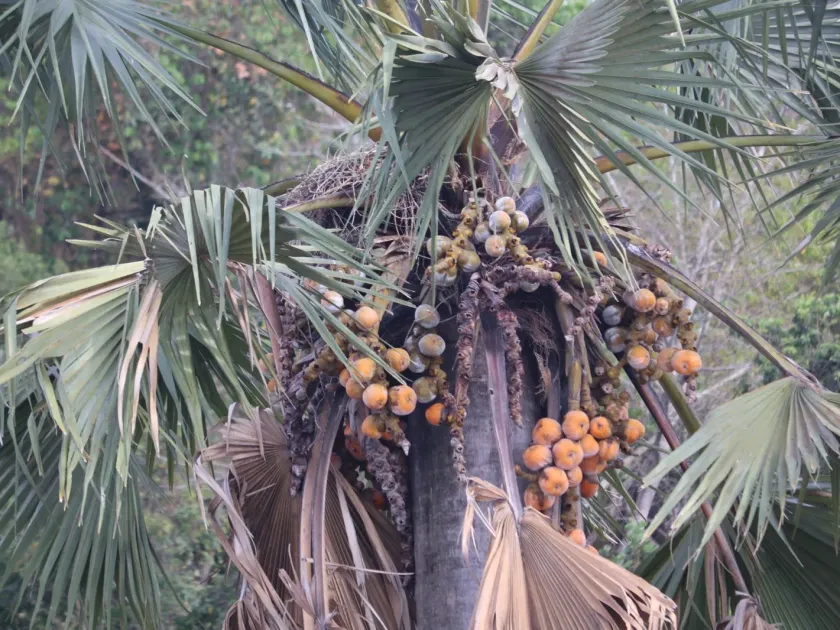
Description
Sowing dates
Borassus aethiopum, commonly known as the African fan palm, belongs to the Arecaceae family. In agricultural practices, the cultivation of this species is primarily initiated through seed sowing.
Due to the hard endocarp of the seeds, germination is often slow and requires pre-treatment, such as soaking in water, to soften the outer shell and enhance success rates.
Planting is optimally scheduled for the beginning of the rainy season, allowing the seedlings to establish a strong root system before the onset of any potential dry conditions.
Seedlings exhibit an initial slow growth phase, primarily focusing on developing a deep taproot to secure stability and access moisture, which is a key survival strategy for the species.
In nursery environments, soil medium should be well-drained and nutrient-rich to support the plant during its most vulnerable stage before field transplantation.
Growing requirements
This palm is native to tropical regions and thrives in high-temperature environments. It is strictly sensitive to frost, which limits its commercial cultivation to frost-free zones.
It prefers deep, alluvial soils, although it shows remarkable resilience when planted in sandy or nutrient-poor soils, provided there is access to subsoil moisture.
The species is known for its high drought tolerance once established, thanks to its extensive root system that can reach deep water tables during arid spells.
Adequate sunlight is essential for growth; hence, Borassus aethiopum should be planted in open areas where it can receive full, unobstructed solar radiation throughout the day.
The plant is fire-tolerant, an evolutionary adaptation that allows it to survive the savanna wildfires common in its natural range without sustaining fatal damage to the growing point.
Yield
Borassus aethiopum is considered a highly versatile multi-purpose crop, providing food, building materials, and raw industrial substances to local economies.
The fruit of the palm is a valuable source of nutrients, containing edible pulp that is consumed fresh or processed into various traditional food products and beverages.
Sap extracted from the male and female inflorescences is a significant source of palm wine and can also be concentrated into high-quality palm sugar or syrup.
The timber obtained from mature trunks is highly prized for its durability and resistance to termite attacks, making it a preferred material for rural construction.
Leaves are widely harvested for weaving baskets, mats, and for thatching roofs, highlighting the plant's role in sustainable rural handicrafts and architecture.
Main diseases and pests
Fungal infections in the root zone represent the most significant threat, especially in areas with poor drainage or during prolonged periods of excessive rainfall.
Insect pests, particularly palm weevils, pose a serious risk as they can tunnel into the trunk and damage the apical meristem, which often leads to the death of the palm.
Seedlings are susceptible to damage by rodents, which can consume the soft tissues of the emerging plant, requiring protective measures during the early establishment phase.
Over-harvesting of fruits and uncontrolled logging are primary human-induced threats that can lead to the depletion of local Borassus populations over time.
Integrated pest management strategies, such as the removal of infested plant parts and regular site monitoring, are recommended to maintain the health of the plantation.
Harvesting
Harvesting fruits is a labor-intensive task, as it often requires skilled workers to climb the tall trunks or use long poles to dislodge the ripened clusters safely.
The harvest cycle for sap is continuous and requires daily attention, with harvesters ascending the trees twice a day to collect the sap produced by the inflorescences.
Proper timing is critical for fruit harvesting to ensure optimal flavor and nutritional content, requiring careful inspection of each tree's development stage.
Post-harvest handling is essential, as the fruit must be stored in cool, well-ventilated conditions to prevent fermentation or fungal spoilage after being collected.
When selecting trees for timber, farmers focus on older specimens that have reached the end of their productive fruit-bearing life to maximize land-use efficiency.