
Dypsis lastelliana
Chrysalidocarpus lastellianus
Description
Growing requirements
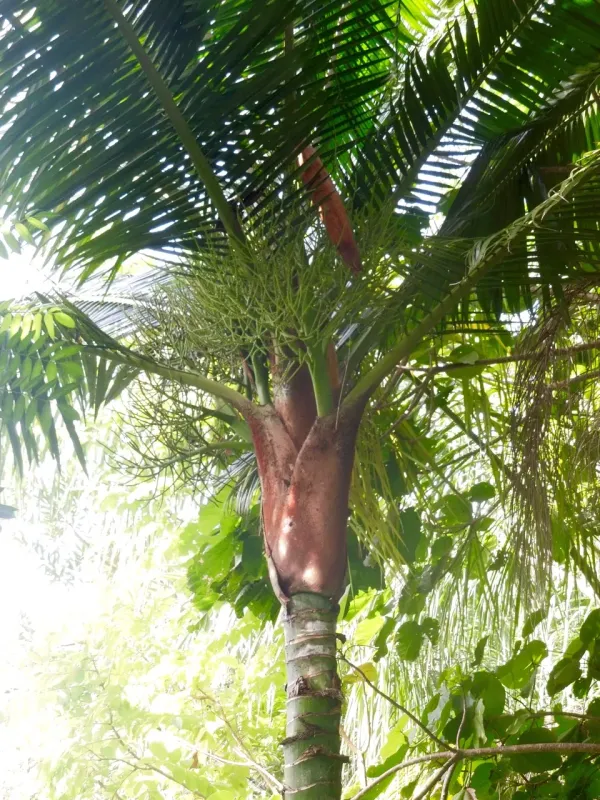
Dypsis lastelliana, commonly known as the Teddy Bear Palm due to its distinctive brown, fuzzy trunk, is a stunning species within the Arecaceae family. This palm is highly prized in tropical landscaping and indoor gardening for its unique texture and elegant foliage.
Native to the humid rainforests of Madagascar, this species thrives in environments where high humidity and warm temperatures remain consistent throughout the year. It does not tolerate frost and requires a controlled environment if cultivated in non-tropical regions.
Successful growth depends on providing bright, filtered light. While mature plants can handle some morning sun, intense midday rays often cause leaf scorch, particularly in specimens grown in pots or greenhouses.
The substrate must be highly porous and rich in organic matter. A well-draining mixture consisting of peat moss, perlite, and high-quality compost ensures that the roots receive sufficient aeration while retaining necessary moisture levels.
Regular irrigation is vital during the growing season. It is essential to ensure that the water temperature is similar to the ambient temperature to avoid shocking the root system, which is common in cold-sensitive tropical palms.
Main diseases and pests
Spider mites are the most frequent pest issue, especially when the indoor air humidity drops below recommended levels. These pests thrive in dry environments and can quickly cause stippling and discoloration on the palm fronds.
Root rot, primarily caused by the Phytophthora pathogen, is the most severe threat to the palm's survival. This condition is almost exclusively the result of improper drainage or over-watering, leading to the decay of the root system.
Nutrient deficiencies, specifically magnesium and potassium, often manifest as yellowing of the leaf tips or interveinal chlorosis. Regular application of a balanced, slow-release palm fertilizer is necessary to prevent these symptoms.
Mealybugs can also infest the dense hair-like fibers on the trunk of the Dypsis lastelliana, making them difficult to detect and eradicate manually. Using systemic insecticides is often the most effective approach for persistent infestations.
Maintaining cleanliness in the growing area by removing fallen debris and dead fronds reduces the risk of fungal infections and provides a less hospitable environment for potential pests to settle.