
Calamus insignis
Calamus insignis
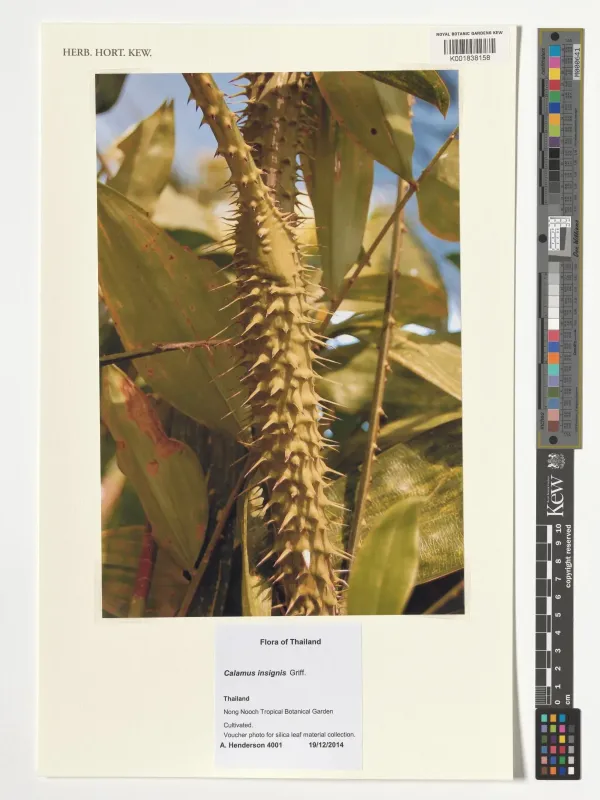
Description
Growing requirements
Calamus insignis is a notable species of rattan palm belonging to the Arecaceae family. This climbing plant is native to the lush tropical rainforests of Southeast Asia, where it thrives in the dense canopy layer.
The cultivation of this plant requires a tropical climate with high temperatures and significant rainfall. It is intolerant of frost and extreme temperature fluctuations, which can severely stunt its growth.
Soil requirements involve well-drained, nutrient-rich substrates that can retain moisture. In commercial cultivation, maintaining the correct soil pH is essential to ensure the plant's efficient nutrient uptake.
Humidity is a critical factor for the health of Calamus insignis. High levels of air moisture mimic the natural habitat, preventing the desiccation of young leaves and promoting the elongation of the rattan stems.
Agrotechnical management requires the installation of support structures. Since the plant is naturally a climber, these supports are vital for achieving the straight and uniform stem growth preferred by industry standards.
Harvesting
The primary economic value of Calamus insignis lies in its stems, which are harvested to produce rattan. This material is prized globally for its exceptional durability, flexibility, and aesthetic appeal in furniture design.
Harvesting techniques involve selecting mature stems that have reached the desired thickness and structural density. Harvesters carefully cut the stems, taking care to preserve the integrity of the mother plant for future growth.
Post-harvest processing is mandatory to ensure the quality of the rattan. This includes debarking, removing the thorns, and cleaning the stems to prepare them for industrial manufacturing and export.
Drying the harvested material is essential to reduce moisture content. This prevents decay and infestation, ensuring the final product remains durable and resistant to environmental stress over long periods.
Sustainable harvesting is a core aspect of managing Calamus insignis plantations. By balancing the extraction rates with the natural regeneration cycle, growers ensure the long-term viability of the crop.