
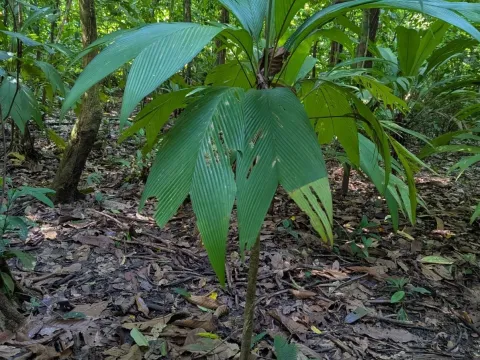
Asterogyne
Asterogyne
Asterogyne is a genus of understory palms belonging to the Arecaceae family, native to the humid rainforests of Central and South America, where they thrive in deep shade.
What the section contains

Asterogyne
These plants demand specific tropical conditions, requiring high humidity and stable, warm temperatures, as they are extremely sensitive to cold and rapid temperature fluctuations.
The ideal growing medium must be rich in organic matter, well-aerated, and possess excellent drainage capabilities to prevent waterlogging, which is a major risk for the root system.
Botanically, Asterogyne species often lack a prominent trunk or have a very short one, featuring elegant foliage that consists of simple or bifid leaves, adapted for capturing filtered sunlight.
In modern horticulture, the Asterogyne is highly valued as an ornamental plant for landscaping in tropical climates and as an indoor palm for conservatories and botanical collections.
Spider mites represent a significant threat to Asterogyne palms, particularly when cultivated in environments with inadequate humidity, leading to rapid infestation of the foliage.
Root rot caused by pathogenic fungi such as Phytophthora or Pythium often results from poor soil drainage or excessive irrigation, which can quickly prove fatal to the plant.
Fungal leaf spot diseases are frequently encountered when moisture remains trapped on the leaf surface without sufficient air circulation, promoting the development of pathogens.
Mealybugs and scale insects may hide in the protected junctions between leaves and the stem, requiring consistent monitoring and manual cleaning or chemical intervention.
Nutrient deficiency, specifically a lack of essential micronutrients in the substrate, can result in foliage chlorosis, which diminishes the ornamental value and overall health of the palm.