
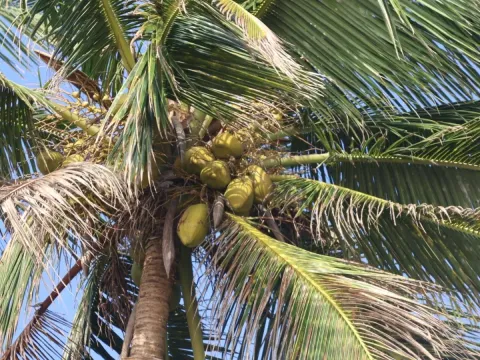
Coconut palm
Cocos
The coconut palm (Cocos nucifera) belongs to the Arecaceae family. Propagation of this crop is performed exclusively through seeds — mature coconuts, which are typically germinated in specialized nurseries before planting.
What the section contains

Coconut palm
The optimal age for transplanting seedlings into the field ranges from 6 to 12 months. At this stage, the plant has developed a sufficient root system and 3–5 well-formed leaves, ensuring a high survival rate in the soil.
Planting is carried out in pits measuring 1x1x1 meter, filled with a mixture of topsoil and organic fertilizers. Planting density usually ranges from 140 to 175 trees per hectare to ensure adequate sunlight penetration.
The preparation of planting material is a critical step: nuts must be selected from high-yielding mother trees aged 20–60 years. The fruits should be fully mature, heavy, and free from any visible damage caused by pests.
On commercial plantations, seedlings are planted in rows, maintaining a distance of 8–9 meters between individual trees. This prevents canopy overlap in the future and ensures optimal light exposure for the photosynthesis process.
The coconut palm is a classic tropical plant that requires an average annual air temperature of around +27 °C. Significant temperature fluctuations and cold spells below +18 °C negatively impact growth and yield.
The coconut palm requires high air humidity (70–80%) and sufficient rainfall, evenly distributed throughout the year, or a reliable drip irrigation system to maintain proper moisture levels.
Soil requirements include well-drained, light sandy loam or alluvial soils. The crop possesses high tolerance to saline soils, making it an ideal candidate for cultivation in coastal tropical regions.
The plant is light-loving and requires open areas with intense sunlight throughout the entire day. In shaded conditions, the palm’s growth slows down, and fruit formation is significantly reduced or inhibited.
Nutrient availability is a key development factor. Palms actively absorb potassium, so the regular application of potassium fertilizers is vital for maintaining the tree's immune system and maximizing nut weight.
The coconut palm begins to enter its fruiting phase between 5 and 7 years after planting. Trees reach full productivity by the age of 15–20 years and continue to bear fruit consistently until the age of 60–80 years.
Average yield per palm ranges from 50 to 100 coconuts per year, depending on the variety, specific climatic conditions, and the intensity of agricultural management practices applied.
There is a classification between tall varieties, used primarily for commercial copra production, and dwarf varieties, which are more frequently used for the production of coconut water.
Fruits are formed in clusters within the leaf axils. The ripening process of a fruit from flowering to full biological maturity takes about 12 months, allowing for year-round harvesting on a plantation scale.
Economic utility includes the processing of the endosperm (copra) to extract oil, the use of husk fibers (coir) in industry, as well as the application of wood and leaves in traditional construction.
Major threats to plantations include fungal diseases, such as bud rot caused by Phytophthora species, which can rapidly destroy the growth point and lead to the death of the tree.
The rhinoceros beetle (Oryctes rhinoceros) is a serious pest, as it bores into young leaves, significantly reducing the growth rate and overall productivity of the palm.
A widespread disease is "yellowing," caused by phytoplasma infections transmitted by insect vectors like leafhoppers, which can destroy entire stands within a short period of time.
The red palm weevil (Rhynchophorus ferrugineus) poses a massive danger, as its larvae feed on the internal soft tissues of the trunk, making infestations nearly impossible to detect until irreversible damage occurs.
To combat pests and diseases, a complex approach is used: regular crown sanitation, the installation of pheromone traps, and, in severe cases, the application of specialized insecticides and fungicides.
Coconut harvesting is carried out manually or by using specialized tools that allow workers to climb to heights of 20–30 meters where the fruit clusters are formed.
In some regions, trained primates are used for picking nuts, although on a commercial scale, the preference is given to using long bamboo poles with knives attached to the ends for cutting.
Harvesting timing is determined by the intended use: for coconut water, nuts are picked at 7–9 months of maturity; for copra, they are harvested at 11–12 months when oil content is maximized.
Harvested fruits must be de-husked (removal of coir) as quickly as possible to prevent spoilage or germination, especially if the goal is long-term storage or processing into oil.
Harvest logistics require rapid transportation to processing facilities, as the freshness of the coconut directly influences the quality and yield of final products like oil, milk, or dried copra.