
Calamus manan
Calamus manan
Description
Growing requirements
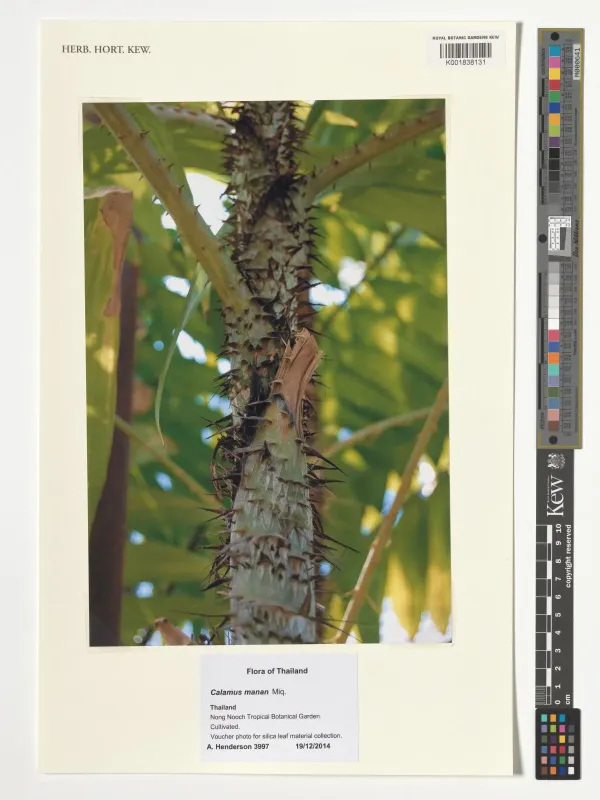
Calamus manan, commonly known as Manau rattan, is a massive climbing palm species belonging to the Arecaceae family. It is celebrated as one of the most commercially valuable rattan species due to the impressive diameter and durability of its stems.
This species is native to the tropical rainforests of the Malay Peninsula, Sumatra, and Thailand. It thrives in high-humidity environments and warm, tropical climates, where the annual precipitation is consistently high throughout the year.
To cultivate this crop, farmers must select locations with deep, nutrient-rich soils that provide excellent moisture retention. The plant requires a specialized environment that mimics the rainforest floor for seedlings and the canopy for mature stems.
Botanically, the plant is a liana that relies on specialized climbing organs, such as flagella and cirri, equipped with hooked spines. These structures allow the plant to scale trees and reach the upper levels of the forest canopy to access necessary sunlight.
Modern agrotechnical practices focus on managed forest farming, ensuring that supporting trees are kept intact to facilitate the vertical growth of the rattan stems. Planting density must be carefully calculated to prevent competition for light and nutrients among the palms.
Main diseases and pests
Like many tropical palms, Calamus manan is susceptible to various stem-boring insects that can damage the internal structure of the rattan. Regular monitoring of the plantation is essential to prevent infestations from spreading through the dense clusters of the plants.
Fungal pathogens often pose a significant threat, especially if the stems remain in contact with damp, poorly drained soil during the early stages of development. Maintaining adequate airflow and preventing water accumulation around the base of the stems helps mitigate these risks.
Weeds can quickly outcompete young rattan seedlings, depriving them of essential nutrients and light. Regular manual weeding around the base of each palm is required until the plant is sufficiently developed to climb independently.
While the spines provide some defense against herbivores, certain mammals can occasionally damage the young shoots. Implementing local wildlife management or fencing in the early years of a plantation is sometimes necessary to protect the crop.
Environmental stress, such as extreme droughts or clearing of the protective forest canopy, can significantly reduce yield. The health of the entire ecosystem is paramount for the long-term productivity and survival of this unique agricultural culture.
Harvesting
The harvest of Calamus manan is a labor-intensive process, typically conducted once the stems reach a marketable diameter after 10–15 years of growth. Harvesters must navigate the spiny foliage carefully to cut the base of the stem.
After being cut, the stems are pulled down from the canopy and immediately stripped of their spiny, protective sheaths. This cleaning process is crucial for maintaining the quality of the raw material before it begins to dry.
The stems undergo a curing process, which traditionally involves sun-drying and treatment with boiling oil or chemical agents to remove natural resins. This step ensures the wood is resistant to insect attacks and improves its flexibility.
Grading is the final step, where stems are sorted by diameter and length for various industrial applications. Large-diameter Manau rattan is highly sought after for furniture frames, as it can be bent into complex shapes when steamed.
Sustainability is a core focus in modern harvesting, with many producers adopting rotational cycles. This ensures that only mature stems are removed, allowing the younger parts of the plant to continue growing, thus protecting the resource for future cycles.