
Astrocaryum standleyanum
Astrocaryum standleyanum
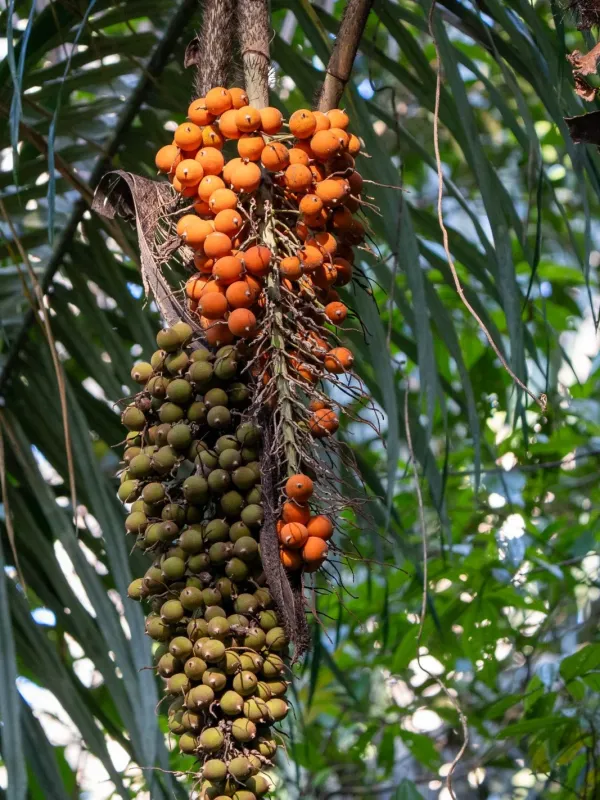
Description
Sowing dates
Propagation of Astrocaryum standleyanum is primarily achieved through seeds, which require careful handling due to their thick and hard endocarp layer.
To ensure successful germination, seeds are typically scarified or soaked in warm water for several days to soften the seed coat and initiate the embryo growth.
Sowing is performed in deep nursery containers filled with a well-draining, nutrient-rich potting medium, maintaining temperatures between 25 and 30 degrees Celsius.
Seedlings remain in the nursery phase for approximately 12 to 18 months, during which time they receive regular irrigation and light shading to promote robust root growth.
Transplanting into the permanent field site should occur at the onset of the rainy season to allow the palm to establish its root system before the onset of dry conditions.
Growing requirements
Astrocaryum standleyanum is a member of the Arecaceae family, native to the tropical forests of Panama and Colombia, where it thrives in humid conditions.
The species requires a tropical climate with no frost exposure, as it is highly susceptible to cold-related stress that can cause irreversible damage to the foliage.
Soil requirements include deep, fertile, and well-drained substrate, preferably rich in organic matter to support the high metabolic demands of the palm.
It prefers high relative humidity and consistent rainfall, although it can adapt to moderate variations if soil moisture is managed appropriately via irrigation.
Abundant sunlight is crucial for adult specimens to reach their full physiological potential and maximize fruit production cycles throughout the year.
Yield
The economic value of this culture is derived from its fruits, which are processed to extract high-quality vegetable oils used in various industrial sectors.
Yield capacity significantly increases once the palm reaches its maturity stage, usually starting after 5 to 7 years of growth under optimal environmental conditions.
The palm produces large, heavy infructescences, and productivity per hectare can be optimized through selective breeding and consistent soil fertilization programs.
Regular maintenance, including the removal of dead leaves and organic debris, helps redirect energy toward fruit development and enhances harvest efficiency.
Sustainable cultivation practices, including intercropping with cover crops, can help improve soil fertility and maintain stable yields over the long term.
Main diseases and pests
Common phytopathological threats include various fungal infections, particularly leaf spot diseases, which proliferate in environments with high humidity and poor airflow.
Pest pressure is frequently caused by palm weevils that bore into the trunk, potentially compromising the structural integrity of the palm and its fruit-bearing capacity.
Root rot, often caused by stagnant water or pathogen-infested soil, represents a significant risk that can lead to the rapid decline and death of the plant.
Vertebrate pests such as rodents may target the fruits or seeds, necessitating the use of deterrents or physical barriers to minimize harvest losses.
Integrated Pest Management (IPM) is strongly recommended to balance chemical usage with biological control methods to protect the plantation ecosystem.
Harvesting
Harvesting is performed by identifying ripe fruit clusters that exhibit a characteristic change in color, indicating peak oil content within the fruit pulp.
Manual harvesting requires skilled labor and appropriate climbing equipment, as the trunk of the palm can reach considerable heights over its lifespan.
After being cut from the crown, clusters are carefully lowered to prevent bruising, as damaged fruits tend to oxidize rapidly, reducing the overall oil quality.
Immediate transportation to the processing facility is necessary to ensure the preservation of raw materials and to initiate extraction before spoilage begins.
Post-harvest processing involves stripping the fruits from the stalks, cleaning, and preparing them for mechanical pressing to obtain the final product.