
Pacaya palm
Chamaedorea tepejilote
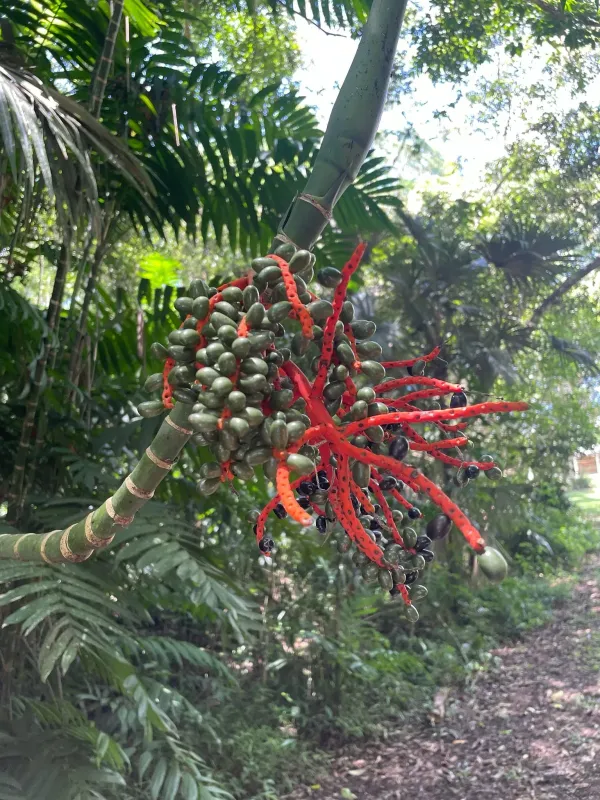
Description
Sowing dates
Propagation of the Pacaya palm is typically achieved through seeds, which should be harvested when fully ripe and sown immediately to ensure viability.
Seeds require a warm and humid environment for germination, with temperatures consistently maintained between +25°C and +28°C to facilitate the process.
The use of a sterile, light, and well-draining substrate is critical to prevent pre-emergence damping-off caused by fungal pathogens in the soil.
Germination can be a slow process, often taking several months, so maintaining constant soil moisture without saturation is key to successful seedling emergence.
Once seedlings develop their first true leaves, they should be carefully transplanted into individual pots, taking extreme care not to disturb the sensitive root system.
Growing requirements
The Pacaya palm (Chamaedorea tepejilote) is native to the rainforests of Central America and thrives in shaded, humid environments under the canopy of larger trees.
This species requires fertile, humus-rich soil with a slightly acidic to neutral pH. Excellent drainage is essential, as the palm cannot tolerate stagnant water around its roots.
Temperature stability is vital, with an ideal range of +20°C to +25°C. Exposure to extreme cold or scorching, direct sunlight can be detrimental to the plant's health.
Maintaining high relative humidity is important for leaf development. In outdoor cultivation, provide wind protection to prevent mechanical damage to the long, feathery fronds.
Regular irrigation is necessary to keep the soil consistently moist. However, growers must avoid overwatering to minimize the risk of root rot and other moisture-related diseases.
Yield
The primary agricultural value of the Pacaya palm lies in its immature inflorescences, which are harvested and consumed as a prized vegetable delicacy.
Palms typically reach reproductive maturity within 4 to 6 years, after which they can produce harvestable floral stalks annually under optimal conditions.
Productivity is influenced by nutrient availability; regular organic fertilization significantly boosts the formation of healthy, large inflorescences in mature palms.
Proper water management during the budding phase is the most critical factor in ensuring high yields and quality of the vegetable product.
Sustainable harvesting practices ensure that the palm remains vigorous and productive over a long lifespan, often lasting several decades in well-managed plantations.
Main diseases and pests
Spider mites are a major threat, particularly in environments with low humidity, where they can quickly infest the fronds and cause significant foliage damage.
Scale insects and mealybugs are common pests that suck plant sap, leading to weakened growth and the potential for sooty mold accumulation on the leaves.
Fungal diseases, including root rot and leaf spot, are prevalent in poorly ventilated areas or locations with excess soil moisture and poor drainage.
Preventative maintenance, such as regular inspection and the removal of dead foliage, is essential to minimize the risk of pest infestations and fungal infections.
- Use biological control agents to manage pest populations naturally.
- Ensure adequate spacing between plants to improve airflow.
- Monitor irrigation levels strictly to avoid waterlogged conditions.
- Apply appropriate fungicides only when necessary and during early infection stages.
Harvesting
Harvesting is performed manually by cutting the unopened floral clusters with a sharp tool before the buds expand and the flowers begin to bloom.
The harvested clusters, often referred to as "pacayas," have a very short shelf life and must be processed or transported to market promptly to maintain their quality.
Care must be taken during harvesting to leave the primary stem intact, ensuring that the palm continues to grow and remains productive for future harvest seasons.
Post-harvest handling involves cleaning the clusters, removing protective husks, and grading them according to size and freshness for commercial distribution.
Proper storage in cool, shaded conditions is required to maintain the crisp texture and the unique, slightly bitter flavor that makes this vegetable highly sought after.