
Borassus madagascariensis
Borassus madagascariensis
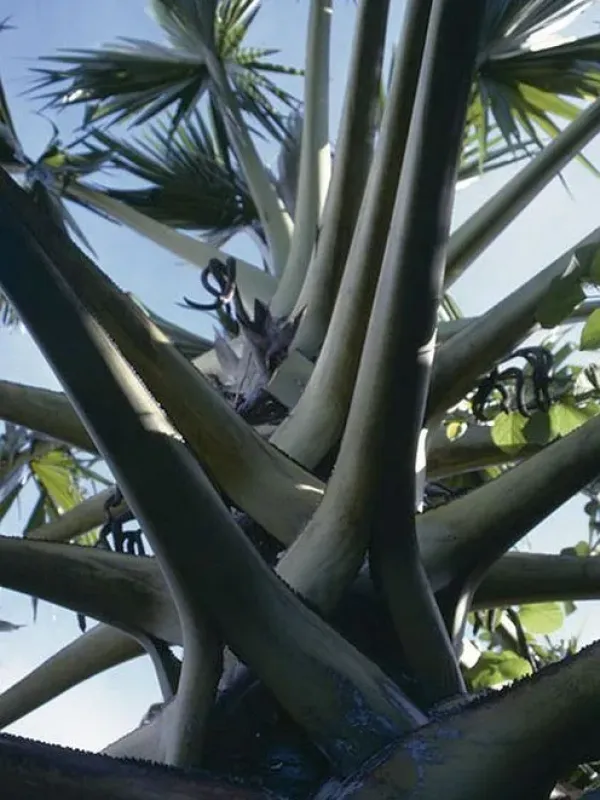
Description
Growing requirements
Borassus madagascariensis is a prominent species of fan palm belonging to the Arecaceae family. This large, robust tree is characterized by a thick, straight trunk and a massive crown of stiff, fan-shaped leaves that can withstand strong winds and intense tropical conditions.
Native to the dry regions of Madagascar, the plant is evolutionarily adapted to savannas and open woodland environments. It thrives in areas that experience distinct wet and dry seasons, demonstrating exceptional resilience to periods of water scarcity.
The ideal soil for this species is well-drained and sandy. It requires deep soil profiles to accommodate its extensive root system, which seeks out moisture and nutrients deep underground. Poorly drained, heavy clay soils are unsuitable and often lead to fatal root rot.
Light requirements are intense, as this palm is a heliophyte. It must be planted in an open area with full exposure to sunlight throughout the day to ensure straight stem development and optimal growth rates.
Climate needs are strictly tropical. The palm requires constant warmth and is highly sensitive to frost, which can cause internal cell damage and permanent cessation of growth in even mature, established specimens.
Yield
The economic utility of the Madagascar Borassus is vast. Its fruits provide a significant food source in local diets, where the fibrous pulp and developing seeds are consumed for their nutritional value.
The timber harvested from mature palms is highly valued for its durability and resistance to termite infestation. It is a staple construction material for roof beams, structural posts, and water-resistant furniture in rural areas.
Sap extraction from young inflorescences is a traditional agricultural practice, yielding a sweet liquid used to produce palm sugar and fermented beverages. This process is sustainable if managed correctly without over-tapping individual trees.
Fiber obtained from the leaves is processed into durable textiles, ropes, and mats. This cottage industry plays a vital role in local economies, providing both domestic goods and surplus for trade.
Yield stability is linked to the long lifecycle of the plant. While production does not begin until the tree is well-matured, once it reaches the fruiting stage, it provides reliable harvests for a prolonged duration, often spanning several decades.
Main diseases and pests
Palm weevils represent the most severe biological threat to this crop. These insects bore into the apical bud and stems, causing catastrophic damage that is often irreversible once infestation is detected.
Fungal pathogens associated with overly damp conditions can affect the foliage and root zones. Maintaining adequate space between trees and ensuring proper air circulation is essential for disease management.
Young palms are susceptible to damage from stray livestock and small mammals that feed on the tender central bud. Protective measures, such as perimeter fencing, are crucial during the first few years of establishment.
Severe tropical storms and hurricanes present a mechanical risk. Although the species is resilient, high-speed winds can strip leaves or cause physical tilting if the soil is saturated during the storm event.
Good plantation management requires regular scouting for signs of necrotic spots on leaves or weeping sap from the trunk, which may indicate pest intrusion requiring immediate localized intervention.