
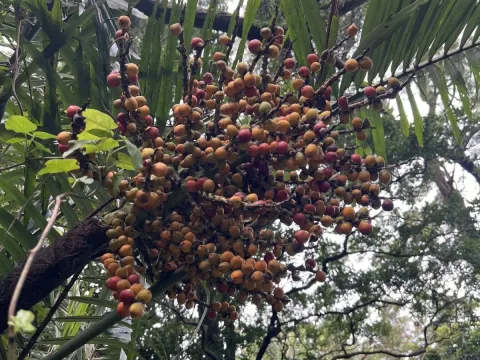
Arenga
Arenga
Arenga palms are typically propagated from seeds. Collectors gather mature fruits, carefully removing the fleshy pulp that contains calcium oxalate crystals known to cause severe skin irritation.
What the section contains
 Arenga caudata
Arenga caudata
Arenga caudata
 Arenga engleri
Arenga engleri
Arenga engleri
 Arenga hastata
Arenga hastata
Arenga hastata
 Arenga hookeriana
Arenga hookeriana
Arenga hookeriana
 Arenga listeri
Arenga listeri
Arenga listeri
 Arenga micrantha
Arenga micrantha
Arenga micrantha
 Arenga obtusifolia
Arenga obtusifolia
Arenga obtusifolia
 Arenga pinnata
Arenga pinnata
Arenga pinnata
 Arenga porphyrocarpa
Arenga porphyrocarpa
Arenga porphyrocarpa
 Arenga undulatifolia
Arenga undulatifolia
Arenga undulatifolia
 Arenga westerhoutii
Arenga westerhoutii
Arenga westerhoutii
 Arenga wightii
Arenga wightii
Arenga wightii
Arenga
Seeds are planted in well-drained nursery containers or beds. Germination is a lengthy process, often taking several months, and requires stable, warm temperatures to ensure successful sprouting.
Seedlings are transplanted into the field once they are robust enough to withstand outdoor conditions, usually when they reach a height of at least 30 to 50 centimeters.
Proper spacing is crucial for maximizing yield in plantations, with recommended distances between plants ranging from 6 to 9 meters to provide sufficient space for leaf canopy expansion.
Young plants require partial shade to protect them from direct, intense tropical sunlight, which helps maintain their metabolic balance during the early stages of growth.
As a member of the Arecaceae family, the Arenga palm thrives in humid tropical environments. It demands consistent temperatures, ideally between +24°C and +30°C, to maintain steady growth.
The crop prefers rich, fertile, and deep soils with good drainage. While the palm is water-loving, waterlogged conditions can lead to root rot and fatal decay of the plant.
Consistent moisture is essential for development, particularly during the dry season. Supplemental irrigation is often required in regions where rainfall patterns are irregular or seasonal.
While the palm can tolerate moderate shade, full sunlight is required for mature trees to optimize sugar accumulation in their inflorescences, which is vital for commercial production.
Regular maintenance of the plantation, including soil enrichment with organic matter, is necessary to support the plant's massive biological needs and long-term production cycle.
The Arenga palm is primarily valued for its sweet sap, which is harvested from the male inflorescences. A healthy tree can provide a steady flow of sap for several years.
Besides sap, the palm is a source of starch, known as sago, which is extracted from the pith of the stem. This harvest occurs just before the plant enters its final flowering phase.
The tough, durable fibers known as ejoo are collected from the leaf bases. These fibers are highly resistant to saltwater, making them exceptionally useful in marine and industrial cordage.
The economic potential of an Arenga plantation is significant, as multiple products can be harvested from a single tree, maximizing the return on agricultural investments.
Yields are dependent on the tree's age and health. The most productive stage occurs when the palm has stored sufficient energy reserves, usually after 7 to 10 years of growth.
Palm weevils are the most significant pests for Arenga, as their larvae bore into the trunk, potentially causing structural failure and death of the palm.
Fungal leaf spot diseases are common in overly dense plantations where air circulation is poor, necessitating regular sanitary pruning to manage moisture levels.
Root pathogens thrive in poor drainage conditions, highlighting the importance of site selection and soil management to protect the plantation from underground decay.
Mites and scales can infest the foliage, siphoning nutrients and weakening the tree, which directly impacts the sugar content of the harvested sap.
- Routine monitoring for trunk boreholes caused by weevil larvae.
- Regular pruning of senescing leaves to improve air circulation.
- Strict water management to prevent water stagnation in the root zone.
Sap collection involves rhythmic tapping of the male inflorescences. The cut surfaces must be refreshed daily to ensure a continuous and clean flow of sap for processing.
Collected sap must be processed into sugar immediately after harvesting to prevent natural fermentation, which significantly alters its quality and yield.
Starch harvesting involves felling the tree at the end of its life cycle, just before it flowers, to recover the maximum amount of pith stored in the trunk.
Fruit harvesting requires extreme caution; workers must wear protective gear to prevent skin irritation from the calcium oxalate crystals embedded in the fruit exterior.
Fiber collection is performed manually during the periodic cleaning of the palm trunk, allowing for the sustainable gathering of industrial materials alongside agricultural production.