
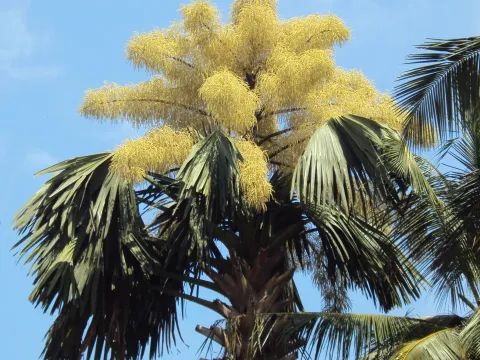
Corypha
Corypha
Corypha, commonly known as the Talipot palm, belongs to the Arecaceae family and is recognized for its impressive size and unique biological life cycle.
What the section contains


Corypha
Native to tropical regions of South and Southeast Asia, this species thrives in wet forest environments and requires well-drained, nutrient-rich soils.
The climate requirements include consistently high temperatures throughout the year and significant air humidity, which are essential for its vigorous growth.
Soil management for Corypha involves maintaining organic matter levels, as the palm requires significant resources to build its massive trunk and gigantic leaves.
Agricultural planning must account for the spatial requirements, as a single tree can have a canopy diameter exceeding five meters once it matures.
The primary economic value of the Corypha palm lies in the production of high-quality fiber extracted from the young fronds, known for its extreme durability.
Historically, the leaves have been used for various crafts, including the creation of traditional palm-leaf manuscripts, which demonstrates the historical utility of this crop.
The pith of the trunk contains starch, which is harvested as a food source, particularly in regions where the palm grows in abundance.
Secondary products include items derived from the seeds and wood, which are utilized in the manufacturing of various utilitarian and decorative objects.
The multifaceted use of biomass makes Corypha a significant plant species in tropical agroforestry and traditional sustainable systems.
While generally robust in their native habitat, Corypha palms can be affected by specific fungal pathogens that target decaying organic matter.
Pests such as red palm weevils and various species of lepidoptera can cause significant damage to the crown and internal tissues of the trunk.
Soil-borne diseases may occur if the palm is planted in areas with poor drainage, leading to root rot and stunted development.
Environmental stress, particularly prolonged drought, can make the trees more susceptible to pest infestations that weaken the tree's structural integrity.
Effective management includes regular inspection of the crown and ensuring that the surrounding soil remains free of excessive water accumulation.
Harvesting of the leaves is performed during the vegetative stage to ensure the fibers maintain optimal quality and flexibility for processing.
Given the immense height and weight of the foliage, manual harvesting techniques are required, often involving specialized tools for reaching the canopy.
Starch harvesting from the trunk is a terminal process that must be timed precisely before the palm enters its final reproductive phase.
The seeds are collected after the mass flowering event, which occurs at the end of the plant's life, providing material for future propagation.
Producers must monitor the age and growth stage of each individual tree to maximize yield before the onset of the monocarpic senescence process.