
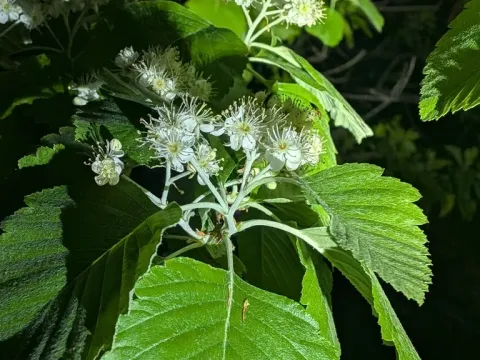
Micromeles
Micromeles Decne.
The genus Micromeles belongs to the Rosaceae family. Often classified as a subgenus of Sorbus, these deciduous trees are native to East Asia, specifically regions within China and Japan. They are typically found in forest clearings and on rocky mountain slopes, showing strong ecological adaptability.
What the section contains

Micromeles
These trees thrive in full sunlight, which is essential for uniform crown development and healthy fruit production. They require deep, well-drained loamy soils with adequate organic matter. Avoid planting in areas with stagnant groundwater, as the species is highly sensitive to root asphyxiation.
Micromeles species are well-adapted to temperate climates, showing significant frost resistance. In agricultural practice, they benefit from a distinct dormant period during winter, which is crucial for the physiological development of the tree in the following season.
Maintenance involves routine weeding of the root zone and mulching to conserve soil moisture. Young trees should be pruned during the dormant phase to shape the crown and ensure good air circulation, which helps reduce the risk of humidity-related fungal infections.
The plant is primarily used for ornamental landscaping and ecological restoration. Its aesthetic value is derived from its foliage and attractive fruit clusters. Some species are occasionally used as rootstock for related fruit varieties in localized agricultural systems.
Common pests include aphids, which tend to congregate on tender terminal growth, and various lepidopteran larvae. These pests can cause significant leaf deformation if left unmanaged, necessitating timely intervention in the spring months.
The trees are susceptible to diseases common to the Rosaceae family, such as fire blight and powdery mildew. Fungal leaf spots may also appear during unusually rainy seasons, particularly if the canopy is too dense to allow for sufficient airflow.
Preventive measures include applying dormant oil or copper-based fungicides to reduce the pathogen load before bud break. Ensuring optimal spacing between trees is critical to preventing the rapid spread of airborne spores among the specimens.
Integrated pest management strategies should prioritize the use of natural predators and selective insecticides. Continuous monitoring of foliage and bark health is essential to identify early signs of localized infestations or pathological spots.
By implementing proper hygiene, such as removing fallen leaves and pruning diseased wood, growers can significantly improve the longevity and vigor of their Micromeles plantings.