
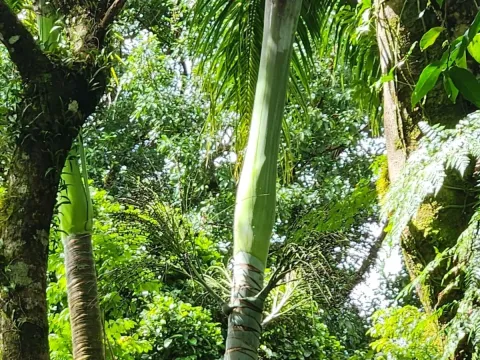
Clinostigma
Clinostigma
Clinostigma is a genus of tall, fast-growing palms belonging to the Arecaceae family. These plants are characterized by their single, smooth, and ringed stems, crowned with elegant, arching pinnate fronds that provide a distinct architectural aesthetic.
What the section contains


Clinostigma
Native to the tropical rainforests of the Pacific Islands, including Fiji, Samoa, and Vanuatu, these palms thrive in regions with high precipitation and constant warmth. They are highly sensitive to frost and require a tropical or humid subtropical climate for healthy development.
Cultivation requires fertile, well-draining soils with abundant organic matter. While these palms love moisture, they do not tolerate waterlogged conditions, which can lead to rapid root degradation. Ensuring adequate soil aeration is a primary agronomic requirement.
The light requirements vary by maturity. Younger Clinostigma specimens benefit from dappled shade, whereas mature trees perform best under full sun. High humidity is essential, especially in non-tropical greenhouse environments, to maintain leaf turgor and growth rates.
In landscaping, Clinostigma is highly prized as a specimen plant or for creating tropical avenues. Their fast growth rate compared to other palm species makes them a favorite for rapid landscape establishment in luxury resort developments and botanical gardens.
The primary threats to Clinostigma include fungal pathogens, such as Phytophthora or Pythium species, which target the root zone. These diseases are often exacerbated by poor drainage and excessive irrigation, leading to sudden wilting and crown rot.
Insect pests commonly include scale insects, mealybugs, and spider mites. These pests tend to colonize the undersides of leaves and the base of the petioles, extracting sap and weakening the palm's structural integrity over time.
- Routine cleaning of the palm crown to remove debris and pests.
- Monitoring for chlorosis, often an indicator of nutrient deficiencies like iron or magnesium.
- Application of systemic pesticides targeting sap-sucking insects.
- Proper spacing to facilitate air circulation and minimize humidity-driven fungal outbreaks.
Palm weevils pose a severe threat in endemic regions. These borers can penetrate the stem, causing irreversible damage to the vascular system of the palm. Integrated pest management strategies are crucial to prevent colonization of these destructive insects.
Nutritional deficiencies should not be overlooked. Because these palms grow rapidly, they have high metabolic demands for potassium and micronutrients. Regular soil testing and fertilization with slow-release palm-specific formulas are recommended to prevent yellowing fronds.