
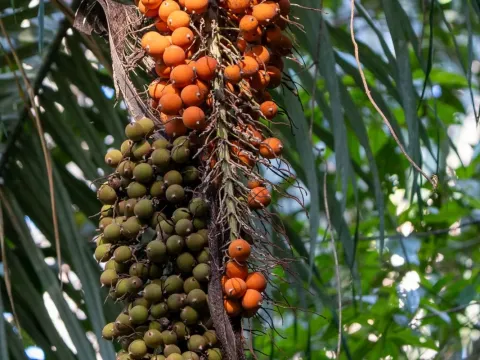
Astrocaryum
Astrocaryum
Astrocaryum propagation is primarily achieved through seeds, which require careful handling due to their extremely hard endocarp that protects the embryo from environmental stressors.
What the section contains

Astrocaryum
To improve germination rates, agricultural producers often utilize mechanical scarification or soaking seeds in warm water for several days before planting in a nursery.
The germination substrate must be loose and well-aerated, ensuring that the roots have sufficient space and oxygen for initial development during the early growth stages.
Temperature control is vital for the success of the nursery phase, with constant warmth around 25-28 degrees Celsius being necessary to maintain metabolic processes in the seedlings.
Once the seedlings develop multiple leaves, they are hardened off before being transplanted into the permanent field site to ensure survival against tropical weather fluctuations.
Astrocaryum is a genus of spiny palms belonging to the family Arecaceae, naturally distributed throughout the tropical rainforests of Central and South America.
The cultivation of these palms requires a climate characterized by high temperatures and consistent rainfall, as the plants do not tolerate frost or prolonged drought periods.
Soil requirements for this crop include deep, fertile, and well-drained soils, as waterlogging can lead to rapid root rot and overall decline of the palm stand.
As a light-demanding species, Astrocaryum performs best when planted in open areas where it can receive maximum exposure to sunlight, promoting photosynthesis and fruit yield.
Agronomic management involves regular monitoring of soil nutrient levels, as the production of high-quality oils requires significant energy reserves from the plant.
The economic utility of Astrocaryum centers on its fruit, which provides oil used in the food industry, as well as cosmetic formulations due to its unique chemical profile.
Productivity is highly dependent on effective management practices; a well-tended palm grove can provide continuous harvests once the trees reach reproductive maturity.
Beyond oil, these palms provide durable fibers harvested from the fronds, which are valued for their tensile strength in local handicraft and industrial rope production.
The harvesting process involves manual collection, which is often challenging due to the heavy, sharp spines characteristic of many species within the genus.
Sustainable harvesting techniques are implemented by growers to ensure the longevity of the palms, often involving selective picking rather than mass removal of fruit clusters.
Pest management is a critical aspect of Astrocaryum cultivation, with palm weevils posing the most significant threat to the structural integrity and health of the palm.
Fungal infections, often occurring in humid environments, can attack both the root system and the foliage, necessitating preventative fungicide application and proper plant spacing.
Effective control measures include the removal of infested debris and the use of integrated pest management strategies to reduce chemical dependence in the orchard.
Nutrient imbalances, particularly those related to micronutrient deficiencies, can cause chlorosis in fronds, directly impacting the photosynthetic capacity of the tree.
By maintaining proper sanitation and ensuring adequate fertilization, farmers can successfully mitigate the impact of common diseases on the overall yield quality.