
Vandanthe Rothschildiana
Vandanthe rotschildiana
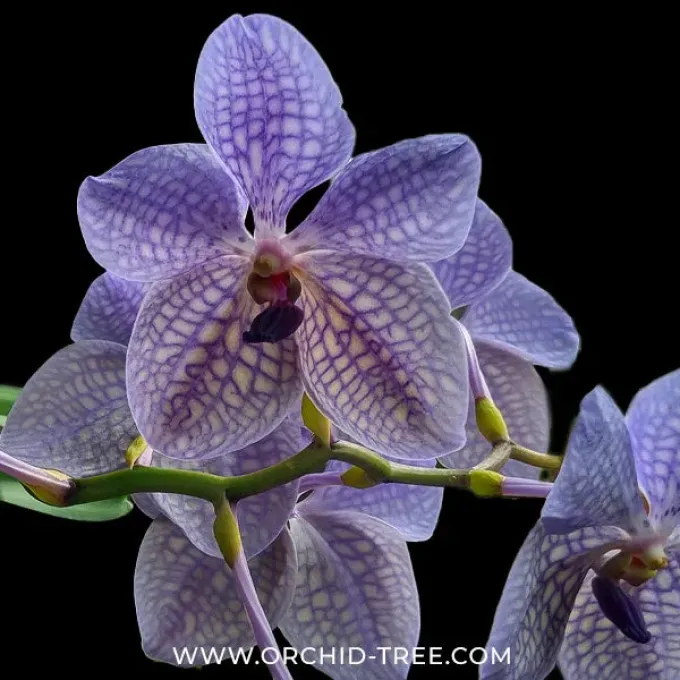
Description
Growing requirements
Vandanthe Rothschildiana is an intergeneric orchid hybrid belonging to the Orchidaceae family, originating from a cross between Vanda and Euanthe. As an epiphyte, this plant requires specialized cultivation techniques that mimic its native tropical rainforest environment.
Temperature management is crucial for the health of this hybrid. It thrives in daytime temperatures ranging from 24 to 28 degrees Celsius, with a slight drop of 5 degrees at night to encourage metabolic balance and flowering cycles.
High relative humidity, ideally between 70 and 80 percent, is essential for its survival. In domestic or greenhouse conditions, this is maintained through misting systems or the use of humidity trays filled with expanded clay and water.
The substrate must provide excellent drainage and airflow for the roots. A mixture of large-grade fir bark, charcoal, and perlite is recommended to prevent waterlogging, which is a common cause of root death in this variety.
Bright, indirect light is a prerequisite for sustained growth. While the plant can tolerate some morning sun, intense midday exposure should be mitigated with light shading to prevent leaf scorching and dehydration.
Main diseases and pests
Fungal pathogens, such as Phytophthora and Pythium, pose a significant threat to Vandanthe Rothschildiana when substrate moisture levels remain consistently high. Proper air circulation is the most effective preventative measure.
Common insect pests include spider mites and scale insects. These pests often proliferate in low-humidity environments, making it vital to monitor the foliage and stem junctions for signs of infestation.
Application of fungicides should be performed strictly according to the manufacturer's instructions, ensuring that the specific orchid tissue can tolerate the chemical composition of the treatment.
Bacterial soft rot, characterized by foul-smelling, mushy lesions on leaves, requires immediate surgical intervention followed by treatment with copper-based bactericides to halt the spread of the infection.
Integrated Pest Management (IPM) practices, such as quarantining new plants and keeping the growing area clean, significantly reduce the risk of disease transmission and ensure the longevity of the collection.