
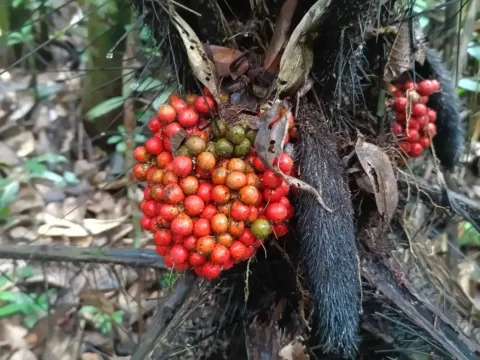
Bactris
Bactris
Propagation of Bactris for industrial or ornamental purposes is most commonly achieved through seeds. Seeds often possess low germination rates, so they must undergo scarification or prolonged soaking in warm water prior to planting.
What the section contains

Bactris
Sowing is carried out in a light, well-draining substrate consisting of a peat and sand mixture. The optimal temperature for germination should be maintained between 25 and 28 degrees Celsius, as seeds lose viability rapidly in cold conditions.
The germination period can last from several months to half a year, requiring patience and strict control over soil moisture. It is crucial to avoid waterlogging, which can lead to embryo rot.
Once the first true leaves appear, seedlings are pricked out into individual containers with a nutrient-rich mixture. The use of growth stimulants during early stages helps strengthen the root system and accelerates the development of primary vegetative organs.
In natural environments, reproduction also occurs through self-seeding when ripe fruits fall onto the damp forest floor. However, in controlled cultivation, seeds require pre-cleaning of the pericarp to prevent mold development.
Bactris belongs to the Arecaceae family and is a typical representative of the tropical flora of Central and South America. These plants prefer zones with high atmospheric humidity and consistently warm temperatures throughout the year.
For normal growth, the crop requires fertile, organic-rich loams with good aeration. Soil acidity should range from slightly acidic to neutral, which facilitates optimal nutrient uptake from the substrate.
The lighting regime plays a critical role: Bactris prefers diffused light in its youth, whereas adult specimens can tolerate direct tropical sun. The plant is extremely sensitive to sudden temperature fluctuations and cold winds.
Irrigation must be abundant and regular, ensuring the root ball never dries out completely. High relative humidity is the key to healthy foliage and prevents spider mite infestations.
In terms of agricultural practice, annual application of complex mineral fertilizers with high nitrogen content during the active growing season is essential. In winter or during temperature drops, fertilizer frequency should be significantly reduced.
The primary pests affecting Bactris are scale insects and mealybugs, which suck sap from young shoots and leaves. Regular inspection of the underside of the leaf blades allows for the detection of these pests at an early stage of infestation.
Spider mites pose a serious threat in environments with dry air. Both biological control methods and treatments with specific acaricides according to instructions are effective against them.
Fungal diseases, such as leaf spots and root rots, arise when irrigation regimes are neglected. Excessive moisture combined with poor ventilation creates ideal conditions for pathogens to thrive.
To prevent the spread of diseases, it is necessary to remove dead plant parts in a timely manner and maintain proper spacing during planting. The use of broad-spectrum fungicides is recommended at the first sign of fungal infection.
- Maintain quarantine for new plants.
- Ensure optimal humidity levels.
- Provide regular ventilation for plantings.
- Use high-quality planting material.
The economic use of Bactris includes the harvesting of edible fruits, which are valued in local cuisine for their high content of vitamins and fatty acids. The crop is harvested manually as the fruits reach full biological maturity.
In some Bactris species, such as the peach palm, fruits become an important food source for local populations after thermal processing. Harvesting requires caution, as many species of this genus feature sharp spines on their trunks and leaves.
Bactris fruits are not suitable for long-term storage; therefore, after harvesting, they should be sold or processed within a few days. Transporting the harvest must be done in ventilated containers to prevent spoilage due to temperature spikes inside.
In addition to fruits, the trunk fibers or young shoots are sometimes utilized for manufacturing household items. However, the primary value of the crop lies in fruit production and ornamental landscaping.
Harvesting efficiency depends directly on proper plantation preparation and the use of protective gear when working with thorny species. Large-scale production requires precise logistics to ensure rapid delivery of perishable raw materials to consumers.