
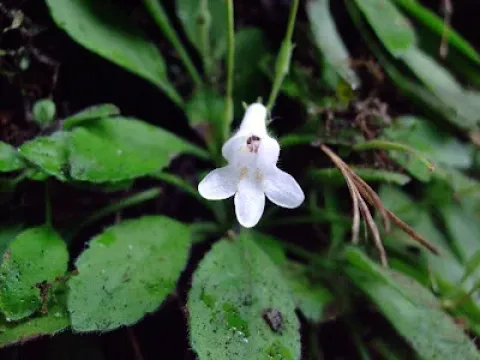
Petrocodon
Petrocodon Hance
Petrocodon is a genus of perennial plants within the Gesneriaceae family. These plants are native to the rocky landscapes of Southeast Asia, primarily found in China and Vietnam, where they thrive in shaded, humid microclimates.
What the section contains
Petrocodon
Botanically, they are characterized by their rosette-forming growth habit and specialized tubular flowers. Many species exhibit distinct pubescence on their leaves, which is an adaptation to capture moisture from the air.
Cultivation requires a stable, temperate environment with consistent humidity levels. They are highly sensitive to thermal shock, necessitating an environment free from drafts and extreme temperature fluctuations.
The growing medium must be highly porous and well-draining. A typical potting mix includes peat moss, perlite, and a small amount of charcoal to keep the soil fresh and prevent acidification over time.
Light requirements for Petrocodon are specific, as they prefer bright, filtered light. Exposure to direct sunlight can severely damage the foliage, leading to necrosis and weakening the plant's structural integrity.
The primary threats to Petrocodon health are fungal pathogens, particularly Rhizoctonia and Pythium, which thrive in waterlogged conditions. Proper irrigation management is the most effective preventative measure.
Common horticultural pests such as mealybugs and spider mites are frequent adversaries in greenhouse environments. These pests tend to colonize the undersides of leaves and leaf axils where protection is highest.
Chemical control measures should be applied with caution due to the sensitivity of Gesneriaceae leaves. Using systemic insecticides at lower concentrations is generally preferred to minimize phytotoxicity.
Poor air circulation often leads to botrytis infections during the flowering stage. Ensuring adequate spacing between plants is essential to maintain a dry micro-environment around the canopy.
Routine hygiene, including the removal of dead leaves and debris from the base of the rosette, is critical to reduce the inoculum levels of pathogens that could lead to plant collapse.