
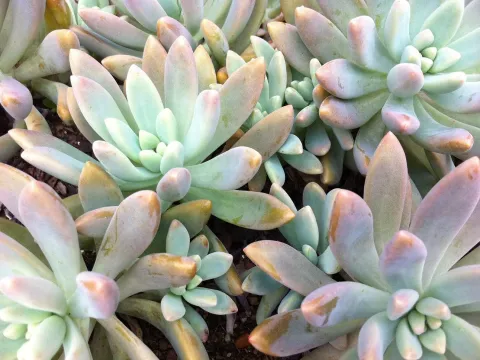
Sedeveria
x Sedeveria E. Walther (Echeveria DC. x Sedum L.)
Sedeveria (x Sedeveria) is an intergeneric hybrid resulting from cross-breeding plants from the Sedum and Echeveria genera, both members of the Crassulaceae family. This perennial succulent combines the architectural form of Echeveria with the structural resilience of Sedum, making it a popular choice for hobbyists.
What the section contains


Sedeveria
The plant requires bright, indirect sunlight to thrive. While it can tolerate some morning sun, excessive exposure to harsh afternoon rays can scorch the succulent leaves. In indoor environments, placing the plant on a south or west-facing windowsill is generally recommended for optimal photosynthesis.
Regarding soil requirements, Sedeveria demands a highly porous and well-draining medium. A specialized succulent and cactus mix is essential, often supplemented with coarse sand, pumice, or perlite to facilitate rapid water drainage and prevent the roots from sitting in stagnant moisture.
Irrigation must be precise; the "soak and dry" method is the standard agricultural practice for this plant. Water the soil thoroughly until excess drains out of the pot, then wait until the soil is completely dry before repeating the cycle. Winter watering should be significantly restricted during the dormant phase.
The primary use of Sedeveria is in the ornamental plant industry, specifically for indoor container gardening and xeriscaping. Its versatility allows it to be used in dish gardens, rockeries, and as a decorative element in greenhouses where climate control is manageable.
Common pests that affect Sedeveria include mealybugs and spider mites. Mealybugs often hide in the tight crevices between the leaves, making them difficult to detect. Regular inspection and the use of neem oil or systemic insecticides are the standard protocols for pest management.
Root rot is the most significant disease threat, typically caused by overwatering or poor drainage. To prevent fungal infections, it is crucial to ensure adequate airflow around the plant and avoid wetting the foliage. In severe cases, the plant must be removed from the pot to trim away rotting tissue.