
Fishtail palm
Caryota urens
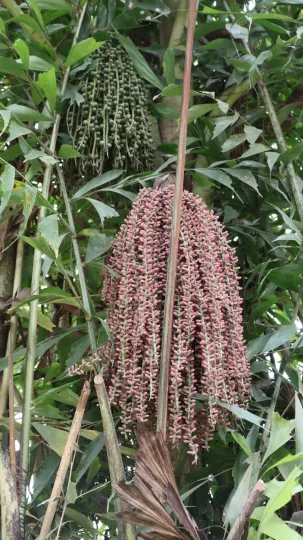
Description
Growing requirements
The fishtail palm (Caryota urens) is a significant species within the Arecaceae family. It is distinguished by its unique bipinnate leaves that resemble the tail of a fish, making it a valuable subject for both ornamental and agricultural purposes.
Native to the tropical rainforests of Southeast Asia and the Indian subcontinent, this palm thrives in humid environments with high precipitation. It is strictly a tropical crop, as it cannot survive any temperatures below the frost line.
The plant requires well-drained, nutrient-rich soil to sustain its rapid growth. In a farming context, ensuring optimal moisture levels while preventing waterlogging at the root zone is crucial for the tree's health.
Botanically, Caryota urens is a monocarpic species, meaning it flowers and fruits once before the stem dies. This biological cycle necessitates a rotational planting strategy for commercial production.
Ideal cultivation sites receive filtered sunlight. Young plants require shade to prevent leaf scorch, while mature palms can withstand more direct light provided the atmospheric humidity remains high.
Yield
The primary agricultural output is the sugary sap harvested from the inflorescences. This sap is used extensively to produce jaggery, a traditional unrefined cane sugar, and is often fermented into palm wine.
The pith of the trunk is a major source of sago-like starch. This carbohydrate reserve is traditionally harvested before the palm begins its reproductive phase, providing a vital food security crop for local communities.
Commercial fiber is extracted from the leaf bases. This natural fiber, known for its extreme durability and water resistance, is used globally in the manufacturing of high-quality ropes, brushes, and durable fabrics.
The economic potential of the fishtail palm is high due to its multi-purpose utility. A single tree can sustain a household by providing both nutrition and industrial materials throughout its productive life.
Harvesting efficiency is determined by the precise timing of sap collection. Experts monitor the development of the flower spike to maximize the volume of sap collected over the several-month productive window.
Main diseases and pests
Palm weevils pose the most significant threat to fishtail palm plantations. These pests bore into the trunk, compromising the structural integrity of the palm and ultimately preventing the collection of sap or starch.
Root rot is a common pathogen-related issue caused by poor soil drainage. Farmers are advised to maintain strict land management practices, including proper spacing and drainage channels, to mitigate this risk.
Scale insects and mealybugs are frequent pests that colonize the foliage. Infestations can drain the plant's resources, causing stunted growth and reducing the sugar concentration in the inflorescence sap.
Nutrient deficiency, particularly in magnesium, often manifests as yellowing of the fronds. Soil analysis and targeted organic fertilization are essential components of a successful agronomic program.
Climate instability, such as prolonged drought, increases the plant's vulnerability to secondary infections. Maintaining a consistent irrigation schedule during the dry season is vital for crop protection.