
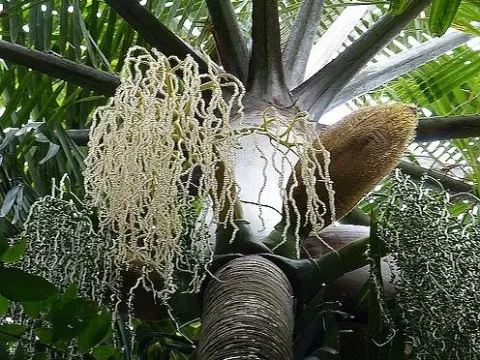
Deckenia
Deckenia
Propagation of Deckenia is achieved solely through seeds. Fresh seeds have a high germination rate, but they require soaking in warm water for 24 to 48 hours to soften the hard outer seed coat.
What the section contains

Deckenia
Seeds should be sown in a light, well-draining substrate consisting of peat, sand, and perlite. Deep pots are essential as the plant quickly develops a robust taproot system that needs space to grow.
The optimal temperature for successful germination ranges from +28°C to +30°C. Consistent soil moisture must be maintained, though caution is needed to avoid waterlogging, which causes seed rot.
Seedlings typically emerge between two and four months after sowing, depending on the freshness of the seeds and the stability of the incubation temperature.
Young seedlings are sensitive to root disturbance. It is crucial to perform transplanting using the transfer method (potting up) to ensure the fragile root system remains intact during the process.
Deckenia is a member of the Arecaceae family and is endemic to the Seychelles. The plant thrives in a humid tropical climate where temperatures remain stable throughout the year.
The species requires bright, indirect light. Intense direct sunlight can scorch the leaves, especially in younger specimens, so providing light shade is often necessary in greenhouse settings.
The ideal soil is rich in organic matter and maintains a neutral or slightly acidic pH. Heavy clay soils should be avoided as they inhibit proper aeration and promote root diseases.
Regular and deep watering is necessary during the active growing season. In hot conditions, misting the canopy is recommended to maintain the high ambient humidity the plant naturally requires.
This palm is not frost-tolerant and will suffer irreparable damage if temperatures drop below +10°C. Consequently, it must be grown in controlled indoor or greenhouse environments in temperate regions.
In its native range, Deckenia is traditionally harvested for its palm heart, known as a culinary delicacy. This involves extracting the terminal bud from the apex of the palm stem.
The harvest of the palm heart is fatal to the individual tree, as it removes the only growing point. Therefore, sustainable management and regulated harvesting are strictly enforced.
The fruits of the palm are round berries that can be processed for consumption, although they are generally less sought after than the stem heart due to their texture.
Seed harvesting is common for commercial propagation. Fruits are collected when they fully mature and turn brown, at which point the seeds are cleaned immediately to maintain viability.
The large, durable leaves are utilized in traditional crafts and building practices, serving as raw materials for weaving mats, baskets, and natural roof thatching.
Root rot is the most significant threat to Deckenia, usually caused by overwatering or poor drainage systems. This is particularly dangerous during the dormant or cooler months.
In indoor environments, spider mites and scale insects are frequent pests. Regular monitoring of the leaf undersides is recommended to catch infestations before they cause significant damage.
Mealybugs are another common nuisance that feeds on plant sap. Their presence often leads to the growth of sooty mold on the leaves, which can interfere with the plant's photosynthesis.
Nutrient deficiencies, specifically chlorosis linked to iron or magnesium shortages, are common issues. These are best managed by applying balanced fertilizers containing chelated micronutrients.
While invasive pests like the red palm weevil can devastate wild populations, preventative care and keeping the palm healthy are the best defenses against secondary infections.