
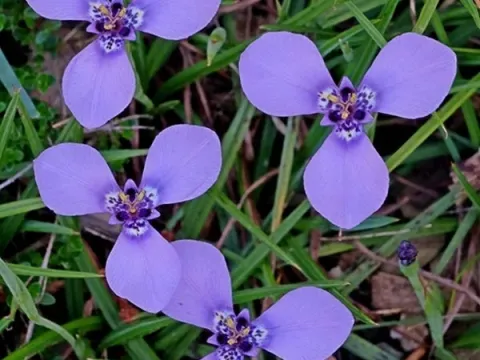
Herbertia
Herbertia Sweet
Herbertia is a genus of perennial bulbous plants belonging to the Iridaceae family. Native to South America, specifically regions in Argentina, Uruguay, and Brazil, these plants are adapted to open, sunny grasslands and are rarely found in traditional agricultural cultivation.
What the section contains

Herbertia
The plant is highly regarded for its aesthetic properties, featuring elegant, star-shaped flowers that bloom in shades of blue and purple. Because it is a niche ornamental plant, its cultivation is primarily focused on botanical collections and specialized garden design projects.
Botanically, Herbertia is characterized by its slender foliage and complex bulb structures. The success of its growth depends largely on providing conditions that mimic its natural habitat, which includes high light intensity and long daylight hours during the growing season.
The soil requirements for Herbertia are strict: the medium must be extremely well-drained and slightly acidic to neutral in reaction. Any tendency for the soil to hold standing water for extended periods will invariably lead to the rapid decline and rotting of the bulb.
Climate conditions are a limiting factor for this crop, as it is not tolerant of frost. In temperate zones, cultivation often takes place in containers or under protective glass, ensuring that the bulbs can be dormant in a dry, cool place during the winter season.
The main threats to Herbertia cultivation involve soil-borne pathogens, specifically fungal infections such as Fusarium. These diseases are exacerbated by improper watering practices and poor drainage, necessitating the use of fungicides and sterilized planting media.
Pest issues often include mites and aphids that thrive in protected environments like greenhouses. Integrated pest management, involving regular inspection and the use of insecticidal soaps, is the recommended approach to maintaining plant health and vigor.