
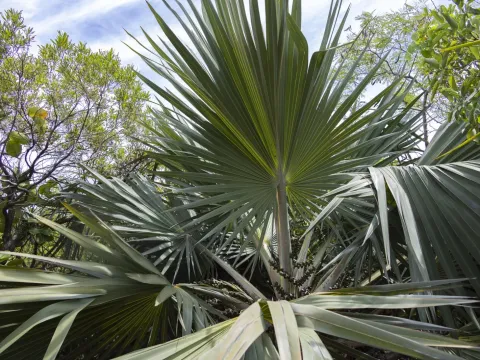
Latania
Latania
Latania is a genus of fan palms belonging to the Arecaceae family. Originating from the Mascarene Islands, these palms are characterized by their slow growth and large, leathery, pleated leaves that provide a distinct aesthetic.
What the section contains


Latania
Cultivation requires a tropical-like environment with bright, indirect light. While they can tolerate some direct sun when mature, younger plants are sensitive to scorching and require filtered sunlight for optimal leaf development.
The ideal temperature range for Latania is between 22 and 28 degrees Celsius. They are frost-intolerant and should be protected from any temperature drop below 15 degrees Celsius, as cold can damage the growing point.
The soil requirement includes a well-draining, nutrient-rich substrate. A typical mix consists of high-quality peat, loam, and coarse sand or perlite, ensuring that the roots remain aerated while retaining consistent moisture.
Humidity management is vital for this species. To maintain healthy foliage and prevent leaf edge browning, it is recommended to mist the plants daily or use a humidifier, especially in controlled greenhouse environments.
Common pests affecting Latania include spider mites, mealybugs, and scale insects. These pests frequently congregate on the undersides of leaves, sucking plant sap and weakening the overall vigor of the palm.
Fungal issues such as leaf spot are common when air circulation is poor. Excessive overhead watering without adequate drying time allows fungal spores to germinate and cause necrotic lesions on the fronds.
Root rot is the most serious threat, usually caused by overwatering or poorly draining soil. If the root system becomes saturated for too long, the plant cannot breathe, leading to rapid decline and death.
Nutrient deficiency, particularly lack of potassium or magnesium, manifests as yellowing of the older leaves (chlorosis). Correcting the fertilization schedule with a balanced palm-specific fertilizer is essential.
Regular sanitation, including the removal of dead or dying leaves, helps to reduce the habitat for pests and pathogens. Keeping the foliage clean also improves photosynthetic efficiency.