
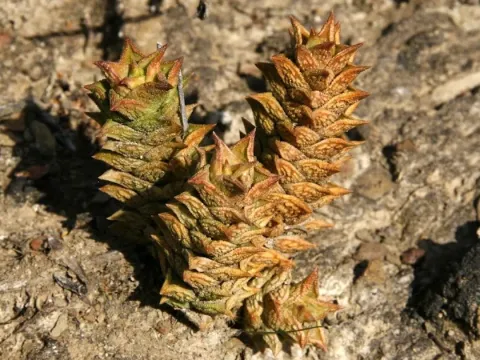
Gasteraloba (Haworthiopsis × Astroloba)
hybrids between Astroloba Uitewaal and Haworthiopsis G. D. Rowley
The term commonly refers to the bigeneric hybrids between Astroloba and Haworthiopsis, which are members of the Asphodelaceae family. These plants are prized for their architectural leaf arrangements and their distinct ability to bridge the morphological characteristics of both parent genera.
What the section contains

Gasteraloba (Haworthiopsis × Astroloba)
Cultivation requires a location with bright, indirect light. These hybrids are highly sensitive to intense midday sun, which can cause leaf bleaching and severe dehydration; therefore, utilizing a sheer curtain or placing the plant in a bright window is highly recommended.
The potting medium must prioritize drainage above all else. A standard mix should consist of two parts mineral grit (perlite, pumice, or gravel) and one part organic potting soil. This structure ensures that moisture does not accumulate near the roots, simulating the arid environment of their ancestors.
Temperature management is crucial during seasonal transitions. While these plants can tolerate a wide range of temperatures, they thrive best when kept at 20°C to 25°C during the growing season. A cooler, dry winter period (10°C to 15°C) is essential for their long-term health and vitality.
Watering should be approached with caution, utilizing the 'soak and dry' method. It is vital to ensure that the soil is entirely arid before the next irrigation cycle, as these hybrids are highly prone to rot if kept in consistently damp conditions.
Root rot is the primary threat to the health of the hybrid. It is frequently caused by a combination of improper soil composition and over-frequent watering. If rot is suspected, immediate unpotting and inspection of the root system are necessary to save the plant.
Mealybugs are a significant pest that tends to hide deep within the dense leaf rosettes. These insects feed on the sap and can lead to stunted growth. Systematic treatment with insecticidal soaps or systemic chemicals is the standard control method for this genus.
Spider mites can colonize the plant during periods of low humidity and high temperature. Their presence is marked by fine webbing and yellowing spots on the leaves. Increasing humidity slightly or applying miticides will help manage and eliminate the infestation.
Scale insects often appear as small brown bumps on the leaves. Because they are protected by a waxy cover, they are difficult to treat with contact sprays. Manual removal followed by an application of systemic insecticide is the most effective approach.
Fungal infections can occur if the leaves are splashed with water during irrigation. Keeping the foliage dry and ensuring good air circulation around the plants will significantly reduce the risk of secondary infections and leaf decay.