
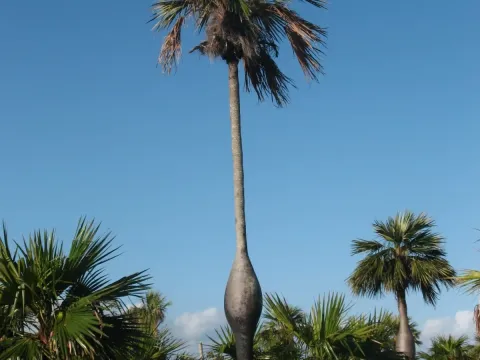
Colpothrinax
Colpothrinax
Colpothrinax, commonly known as the Barrigona palm, is a distinctive genus belonging to the Arecaceae family. This plant is native to Cuba and is well-adapted to savanna environments and limestone-rich landscapes.
What the section contains

Colpothrinax
The culture requires high levels of solar radiation to maintain its structural integrity and growth rate. It is strictly a tropical plant, meaning it lacks cold hardiness and must be protected from temperatures below 10-12 degrees Celsius to thrive.
Regarding soil preferences, the plant demands excellent drainage. Waterlogged conditions are detrimental to the root system and must be avoided. The ideal substrate is porous, rocky, or sandy soil, which mirrors its natural habitat.
Agricultural management involves regular but careful irrigation practices. While the plant can withstand short dry spells, it performs best when the soil retains moderate humidity without becoming saturated.
In terms of usage, Colpothrinax is primarily valued as an ornamental specimen in tropical landscaping. Its unique, barrel-shaped stem makes it an attractive choice for botanical gardens and specialized collections.
The primary threat to the health of the plant is root rot caused by stagnant water. Once the root system is compromised by fungal pathogens due to poor drainage, the plant often fails to recover.
Insect pests such as palm weevils and scale insects pose significant risks to both the leaves and the stem. These pests can rapidly weaken the tree, leading to stunted growth or structural failure of the trunk.
Management of pests typically requires systemic insecticides and vigilant monitoring. Early detection is crucial, as once a palm weevil infests the core of the stem, chemical treatment becomes significantly less effective.
Nutrient deficiencies, particularly involving potassium, can manifest as necrotic spotting on the foliage. Maintaining a balanced fertilization program is essential to bolster the plant's resistance to environmental stress.
Sanitation practices, such as removing dead or dying fronds, are vital to minimize the risk of fungal buildup. Keeping the surrounding area clean prevents the spread of pathogens that thrive in decaying organic matter.